
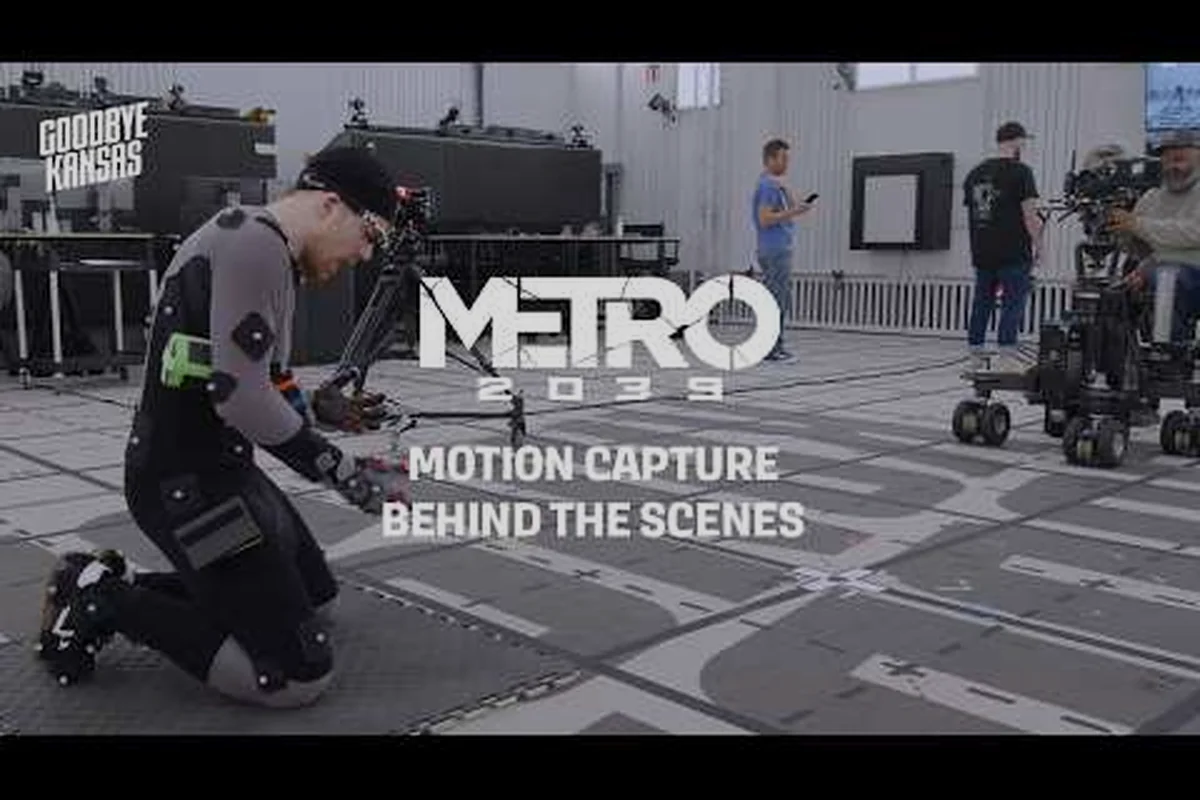
The METRO 2039 developer interview circuit has been unusually quiet since the Xbox First Look premiere, but the fragments that have surfaced paint a picture of a team wrestling with legacy, scale, and the weight of a darker narrative. When creative director Andriy "mLs" Shevchenko told Xbox Wire that the game returns to the Moscow tunnels because that is "what makes Metro, Metro," he signaled a deliberate pivot from Exodus's open expanses back to claustrophobic corridors. That single statement, paired with Dmitry Glukhovsky's claim that this story is "darker than anything the series has seen before," gives players a clear lens for interpreting every subsequent reveal. This article consolidates the key takeaways from the METRO 2039 developer interview coverage, the gameplay breakdown details, and the story trailer news that has the community buzzing about the February 2027 launch window.
Developer Interview Highlights: What 4A Games Confirmed
The most substantive METRO 2039 developer interview moments emerged from the Xbox First Look broadcast on April 16, 2026, where the team confirmed that the game is built on the 4A Engine with a return to the series' signature semi-linear level design. Executive producer Jon Bloch described the narrative pillars as the consequences of war, the cost of silence, the horrors of tyranny, and the price of freedom — themes that directly inform the Novoreich regime's rise under Hunter. Players who have followed the official reveal trailer analysis will recognize these motifs woven throughout the nightmare sequences.
The interview circuit also clarified the protagonist situation, confirming that METRO 2039 introduces the Stranger, a fully voiced character whose exile and return drive the plot. This marks a significant departure from Artyom's silent protagonism, and the developers explained that the change allows for more direct emotional engagement with the story's moral dilemmas. According to the Steam store API listing, the game is categorized as Action and Adventure with Single-player focus, Steam Achievements, full controller support including DualSense, Steam Cloud saves, and Family Sharing — details that confirm the technical foundation while leaving gameplay specifics to the trailers.
The Narrative Direction and Glukhovsky's Involvement
Dmitry Glukhovsky's role in the METRO 2039 developer interview discussions has been a focal point, since his involvement signals canonical legitimacy. The Wikipedia entry for the game notes that the narrative was designed alongside Glukhovsky, who emphasized that this chapter explores the aftermath of Exodus's ending with a tone that pushes the series into new emotional territory. The Novoreich regime represents a fascist consolidation of power that emerged from the chaos following the previous game's events, and Hunter's transformation into its leader provides the central antagonistic force.
What makes this narrative direction particularly interesting is how it reframes the series' moral questions. Previous Metro games asked players to choose between factions with competing survival philosophies, but METRO 2039 positions the Spartan Order as enforcers of an authoritarian state rather than protectors of the people. This inversion forces players to reconsider their allegiances, and the developers have hinted that faction reputation systems will track player choices more granularly than in previous entries.
Technical Ambitions on the 4A Engine
The technical side of the METRO 2039 developer interview coverage reveals that 4A Games is pushing the 4A Engine to handle ray-traced global illumination alongside the dense, atmospheric environments that define the series. The gameplay breakdown from the Hunter trailer showed weapon handling with visible recoil patterns, environmental destruction, and the signature gas mask mechanics returning with what appears to be a more demanding filter economy. Community reports from the reveal suggest that the team is targeting 60 FPS on current-gen consoles, though exact performance metrics remain unconfirmed.
The decision to return to tunnel-based level design after Exodus's open areas represents a calculated technical and creative choice. Semi-linear corridors allow the team to control lighting, pacing, and encounter density with precision, and the semi open level structure mentioned in early coverage suggests a hybrid approach that preserves exploration while maintaining narrative momentum.
Gameplay Breakdown: Combat, Stealth, and the New Weapon System
The METRO 2039 gameplay breakdown from the Hunter trailer, which runs nearly three minutes of in-game footage, revealed several mechanical shifts that distinguish this entry from its predecessors. The most immediately visible change is the weapon degradation system, which introduces jamming mechanics and misfire risks that force players to maintain their arsenal actively. This adds a survival-horror layer to combat encounters, since a rifle that fails mid-firefight can turn a manageable situation into a desperate scramble for cover.
The trailer also showcased the hand-crafted weapons system, which appears to replace the workbench upgrade paths from previous games with a more granular approach. Players will scavenge components, repair damaged parts, and build weapons that reflect their playstyle preferences. The Tikhar pneumatic rifle makes a return, offering silent precision for stealth-focused players, while the Kalash rifle remains the reliable workhorse for direct engagements. According to player observations from the trailer, the weapon handling feels weightier than Exodus, with more pronounced recoil and reload animations that emphasize the physicality of each firearm.
Stealth and Enemy AI Improvements
Stealth mechanics received significant attention in the METRO 2039 developer interview discussions, with the team emphasizing that enemy AI now responds to light sources, sound levels, and environmental cues more intelligently. The Nosalises and Watchmen return with updated behavior patterns, and the trailer showed the Stranger using throwing knives and melee finishers to dispatch enemies silently. The knife finisher mechanic requires precise positioning, and the developers confirmed that stealth takedowns are riskier but more resource-efficient than open combat.
The Blind Ones and Spider Bugs also return, with the latter retaining their vulnerability to light and fire. The gameplay breakdown suggests that 4A Games has diversified mutant behaviors to prevent the repetitive encounter patterns that some players criticized in Exodus. Each enemy type now has distinct attack tells, weak points, and environmental interactions that reward attentive players.
The Filter Economy and Resource Management
Resource management remains a cornerstone of the METRO 2039 experience, and the developer interview coverage confirmed that the gas mask filter economy is more demanding than in previous entries. Filters are scarcer, and the timer mechanics have been adjusted to create sustained tension during surface excursions. The ammo economy also received attention, with military-grade rounds serving as currency in station trading hubs — a system that reinforces the survival-horror loop of scavenging, trading, and conserving.
The crafting system extends beyond weapons to include medkits, throwables, and environmental tools. Players will need to balance their inventory capacity against the need for diverse equipment, and the developers have hinted at a weight system that affects movement speed and stamina regeneration. These interconnected systems create a gameplay loop that rewards planning and punishes recklessness, which aligns with the series' hardcore survival identity.
Story Trailer News: Decoding the Nightmare Sequences
The METRO 2039 story trailer news cycle has been dominated by analysis of the reveal trailer's opening nightmare sequence, which shows the Stranger trapped in a flooded tunnel while shadowy figures approach. The nightmare sequences serve as a narrative device that externalizes the protagonist's psychological state, and the developers confirmed that these moments will appear throughout the campaign as recurring set pieces. Each nightmare reveals fragments of the Stranger's past and hints at the trauma that drives their mission.
The trailer also introduced the Novoreich propaganda machine, which uses broadcast systems to control information across the metro's stations. This represents a new form of environmental storytelling, where players encounter posters, audio messages, and staged events that reinforce the regime's ideology. The Hunter's rise from Spartan Ranger to authoritarian leader is depicted through these propaganda pieces, showing how his message evolved from protection to control.
The Surface Enemy and the New Threat
One of the most intriguing elements from the METRO 2039 story trailer news is the mention of a surface enemy that differs from the demons and mutants of previous games. While specific details remain scarce, the developers have described this threat as organized and intelligent, suggesting a human force that has adapted to the irradiated surface. This creates a three-way conflict between the Novoreich regime, the independent station resistance, and the surface enemy, with the Stranger caught in the middle.
The frozen stories approach to environmental storytelling, which the developers introduced during the Xbox First Look, involves leaving narrative fragments scattered throughout the world that players can piece together. These stories range from personal journals to official regime documents, and they provide context for the political situation without relying on lengthy cutscenes. Players who explore thoroughly will uncover connections between the surface enemy and the Novoreich regime that explain the conflict's origins.
The Release Date Shift: From Winter 2026 to February
The METRO 2039 release date change from the initially speculated winter 2026 window to the confirmed February 2027 launch has generated significant discussion within the metro community news circles. The shift suggests that 4A Games is prioritizing polish over meeting an earlier deadline, which aligns with the studio's history of delaying releases to ensure quality. The February 2027 launch places the game in a crowded release window, but the developers have expressed confidence that the final product will justify the wait.
Players who want to track the game's progress can check the Gamescom 2026 coverage for additional details, since the convention served as a major showcase for new gameplay footage. The delay also means that the winter 2026 period will be quiet for Metro news, with the team focusing on bug fixes, performance optimization, and final content passes.
Community Reactions and Metro Community News
The metro community news surrounding METRO 2039 has been overwhelmingly positive, though not without concerns. Players have praised the return to tunnel-based level design, with many expressing relief that the series is returning to its horror roots after Exodus's more action-oriented approach. The Ranger Mode difficulty setting has also been confirmed, and the community is eager to see how the new weapon degradation system interacts with the mode's increased damage and reduced HUD.
However, some community members have raised questions about the faction reputation system, specifically whether player choices will have meaningful consequences or if the system is purely cosmetic. The developers have responded to these concerns in interviews, confirming that faction alignment affects mission availability, NPC reactions, and ending variations. This suggests that the independent station network will respond dynamically to player actions, creating replayability across multiple playthroughs.
What Players Are Saying About the Gameplay Breakdown
The METRO 2039 gameplay breakdown has generated extensive discussion on forums and social media, with players analyzing every frame of the Hunter trailer for gameplay details. The weapon jamming mechanic has been a particular point of interest, with some players expressing concern that it might feel frustrating rather than tense. Others have pointed out that the mechanic encourages careful weapon maintenance and adds a layer of strategy to resource management.
The stealth improvements have been universally praised, with players noting that the new enemy AI appears more responsive and less predictable than in previous games. The throwing knives and melee finishers add new options for silent playthroughs, and the community is already speculating about optimal stealth builds. According to community reports, the DualSense controller support on PC will include haptic feedback and adaptive trigger effects, which should enhance immersion for players using compatible hardware.
The Developer Interview's Impact on Expectations
The METRO 2039 developer interview coverage has effectively managed expectations by emphasizing the game's darker tone and more demanding survival mechanics. Players who found Exodus too forgiving will likely appreciate the increased challenge, while newcomers may need to adjust to the series' unforgiving resource economy. The beginner guide resources available on this site can help new players understand the core systems before the February 2027 launch.
The developers have also confirmed that the game will feature multiple endings based on player choices, a series staple that rewards thorough exploration and careful decision-making. The moral choice system tracks player actions across the campaign, and the developers have hinted that some choices will have consequences that only become apparent in subsequent playthroughs. This depth is exactly what the community has come to expect from the series, and the METRO 2039 developer interview has reinforced that 4A Games understands its audience.
Practical Takeaways: What to Expect at Launch
| System | Previous Games | METRO 2039 |
|---|---|---|
| Level Design | Linear / Open | Semi-Linear Hybrid |
| Weapon Upgrades | Workbench Tiers | Hand-Crafted Components |
| Filter Economy | Moderate Scarcity | High Scarcity |
| Enemy AI | Pattern-Based | Context-Responsive |
| Protagonist | Silent (Artyom) | Voiced (The Stranger) |
The faction reputation system will track player alignment with the Novoreich, the resistance, and neutral stations, and the propaganda encounters will present moral dilemmas that test player values. The surface enemy adds a wildcard element to the conflict, and the developers have confirmed that this faction will play a significant role in the campaign's second half.
| Faction | Alignment | Key Benefits |
|---|---|---|
| Novoreich | Authoritarian | Access to Military-Grade Equipment |
| Resistance | Libertarian | Stealth Tools and Intel Networks |
| Independent Stations | Neutral | Trading Opportunities and Safe Havens |
| Surface Enemy | Hostile | Unique Loot and Lore Discoveries |
Players should also prepare for the Ranger Mode difficulty, which removes most HUD elements and increases damage taken and dealt. This mode is designed for experienced players who want the most immersive experience, and the developers have confirmed that it will be available from the start. The achievement list includes challenges for completing the game on Ranger Mode, which will appeal to completionists.
| Difficulty | Damage Multiplier | HUD Elements | Recommended For |
|---|---|---|---|
| Reader | 0.5x | Full | Story-Focused Players |
| Normal | 1.0x | Standard | First-Time Players |
| Hardcore | 1.5x | Reduced | Experienced Players |
| Ranger Mode | 2.0x | Minimal | Series Veterans |
Frequently Asked Questions
What did the METRO 2039 developer interview reveal about the story?
The METRO 2039 developer interview confirmed that the narrative follows the Stranger, a voiced protagonist returning to the Moscow tunnels after exile. The story explores the Novoreich regime's rise under Hunter, with themes of tyranny, silence, and freedom. Dmitry Glukhovsky collaborated on the narrative, which he described as darker than anything the series has seen before.
When is the METRO 2039 release date and did it change?
The METRO 2039 release date changed from the initial winter 2026 speculation to a confirmed February 2027 launch. The delay allows 4A Games to polish the game and optimize performance. The release date change was announced during the Xbox First Look presentation, and the team has committed to the February 2027 window.
What new gameplay mechanics were shown in the METRO 2039 gameplay breakdown?
The METRO 2039 gameplay breakdown revealed a weapon degradation system with jamming mechanics, hand-crafted weapon customization, and improved stealth AI. The filter economy is more demanding, and the ammo economy uses military-grade rounds as currency. Throwing knives and melee finishers add new silent takedown options for stealth-focused players.
How does the Novoreich faction affect player choices?
The Novoreich faction controls most of the metro through propaganda and military force, and player alignment with the regime affects mission availability and NPC reactions. The faction reputation system tracks choices across the campaign, leading to multiple endings. Players can support the resistance, cooperate with the regime, or maintain neutrality with independent stations.
Will METRO 2039 feature Ranger Mode and multiple endings?
Yes. METRO 2039 brings back Ranger Mode with minimal HUD and increased damage, unlocked from the start. Multiple endings return, driven by the moral choice system tracking faction alignment across the campaign. Some consequences only surface in subsequent playthroughs, rewarding exploration of the Novoreich regime's darker narrative threads.