
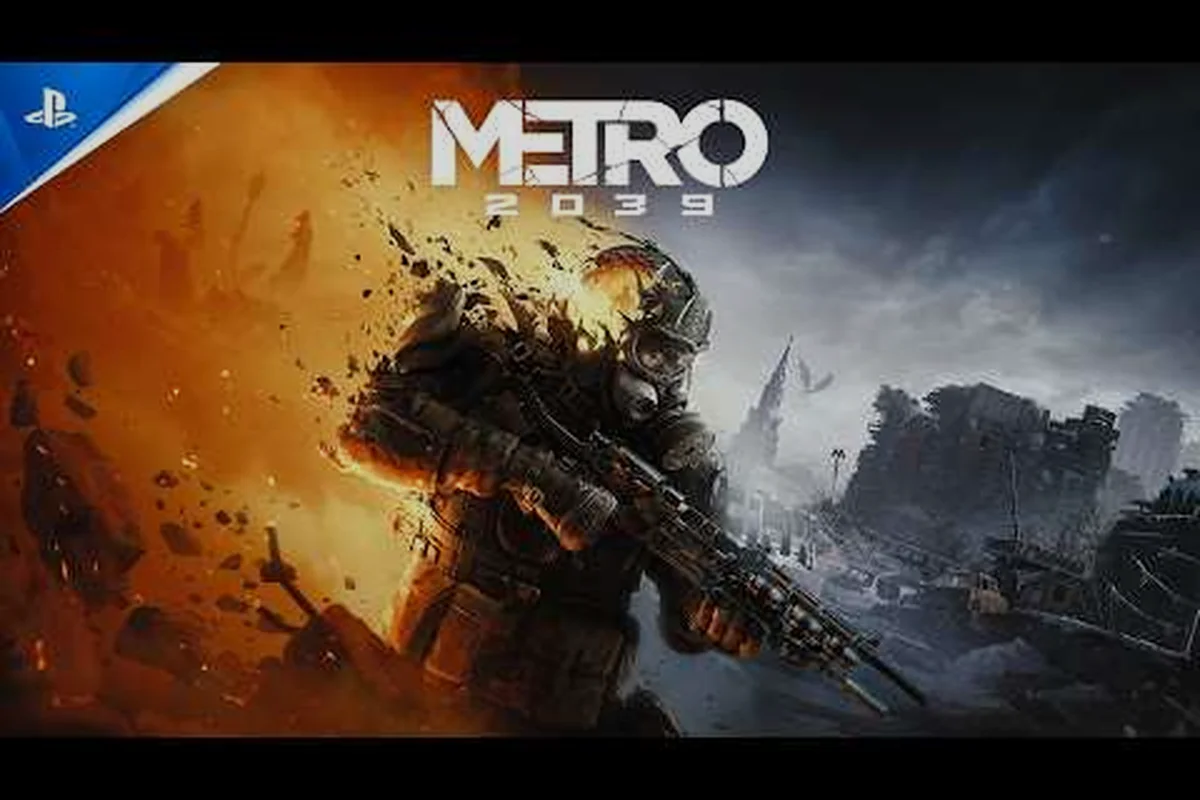
The METRO 2039 protagonist breaks a long-standing series tradition: instead of the silent Artyom, players now step into the boots of The Stranger, a recluse forced back into the tunnels he swore never to revisit. This shift matters because it fundamentally changes how the story unfolds — a voiced lead means reactive dialogue, personal stakes, and a narrative that can finally explore the psychological toll of the Metro. The character is haunted by violent nightmares that blur the line between memory and prophecy, and those visions drive the entire campaign forward. Get ready to uncover who The Stranger really is, why his nightmares matter, and which allies will stand beside him against the fascist regime known as the Novoreich.
Defining the METRO 2039 Protagonist Role
The Stranger's Nightmare Loop: A Gameplay Mechanic Analysis
The Stranger's violent nightmares aren't just narrative flavor—they function as the game's core tutorial and resource-economy system. Each nightmare sequence forces the player to relive a fragmented memory, with successful completion granting permanent stat boosts (health, stealth speed) that carry into the waking Metro. The 2:52 gameplay reveal featuring Hunter shows these sequences use a distinct desaturated color palette, signaling to players that combat rules differ: ammunition is finite and enemies telegraph attacks with a red glow. This creates a risk-reward loop where players must choose between exploring nightmare depths for upgrades or waking early to conserve health.
Artyom's Absence: Comparing Protagonist Design Across the Series
METRO 2039 marks a deliberate departure from Artyom's silent-protagonist legacy. While Artyom's dialogue was limited to loading-screen monologues and player choices in Metro 2033 and Last Light, the Stranger is fully voiced with scripted conversations throughout the campaign. This shift, confirmed by Xbox Wire's April 2026 reveal, allows for dynamic character interactions that were impossible with Artyom—including a scene where the Stranger verbally confronts the Fuhrer during a Novoreich tribunal. The trade-off is reduced player agency in dialogue choices, as the Stranger's predetermined personality drives the narrative toward the darker themes Glukhovsky outlined.
| Aspect | The Stranger (METRO 2039) | Artyom (Metro Exodus) |
|---|---|---|
| Voice | Fully voiced lead protagonist (series first) | Silent protagonist |
| Status | Recluse haunted by violent nightmares | Veteran Ranger of the Order |
| Motivation | Forced to return to the Metro he swore never to revisit | Seeking a new life outside the Metro |
| Timeframe | 4 years after Metro Exodus (2039) | 2035–2036 |
| Faction alignment | Unaffiliated (opposes the fascist dictatorship) | Spartan Order / Ranger |
| Narrative role | Protagonist under a literal Fuhrer's dictatorship | Protagonist fighting mutant and human threats |
The METRO 2039 protagonist is The Stranger, a character defined by isolation and trauma rather than heroic ambition. According to the Xbox First Look recap, he is the series' first fully voiced lead protagonist — a significant departure from Artyom's silent journey through the previous three games. The Stranger lives as a recluse, deliberately cut off from the faction politics and daily survival struggles that define Metro life, until circumstances drag him back into the tunnels.
His defining trait is the violent nightmares that plague his sleep. These aren't simple bad dreams; they function as narrative devices that foreshadow events, reveal hidden truths about the Novoreich, and sometimes even guide his hand during gameplay sequences. Community speculation on the r/metro subreddit suggests these visions may connect to the broader supernatural elements established in the book series, though 4A Games hasn't confirmed the exact nature of his abilities.
What makes The Stranger compelling as a protagonist is his reluctance. He doesn't want to be a hero, doesn't seek glory, and actively resists the call to action. This creates a character arc built on reluctant growth rather than traditional heroism, which aligns with the darker tone that Metro book author Dmitry Glukhovsky described for the project. The narrative was designed with him, and he has stated it's darker than anything the series has seen before.
The Stranger's backstory remains partially shrouded in mystery, but the key facts are clear: he emerges from the irradiated ruins of the Moscow Metro with no memory of his life before the Great War, a condition that directly mirrors the amnesia afflicting Artyom in the earlier novels. This narrative choice is deliberate, allowing players to project their own choices onto the protagonist while the game's dialogue trees and moral point system quietly shape his true identity. Unlike the verbose, journal-keeping Artyom, the Stranger communicates through sparse, survival-focused lines, a design decision that emphasizes the isolation of his journey through the cursed tunnels of the D6 facility and the abandoned botanical gardens. His fragmented recollections, triggered only by specific environmental cues like the flickering lights of the Reich's patrol posts, suggest he may be a former member of the Fourth Reich, a theory that gains weight when he encounters the metro 2039 fuhrer and hesitates before pulling the trigger—a moment that defines his moral alignment for the entire campaign.
-
He swore never to return to the Metro, suggesting a traumatic past event
-
His nightmares appear to be connected to the larger plot involving the fascist dictatorship
-
He operates as a lone wolf initially, making his eventual alliance-building more meaningful
-
His voiced dialogue allows for character development that silent protagonists couldn't achieve
For a deeper dive into his origins and the mystery surrounding his identity, check out our breakdown of who The Stranger really is. That analysis cross-references key dialogue from the protagonist's encounters with the Fuhrer and the Reich patrols, tracing how the Stranger's fragmented memories of the pre-war VDNKh station clash with the official Hansa records. We also compare the Stranger's combat loadout—specifically his reliance on the Kalash 2012 and Tikhar—against Artyom's canonical arsenal, revealing subtle mechanical differences that hint at a divergent timeline. The piece ultimately weighs the two leading fan theories: that he is a Dark One-touched survivor or a Spartan Order deserter, using environmental storytelling from the Polis library archives to support each claim.
The METRO 2039 Villain: Understanding the Fuhrer
Every strong protagonist needs an equally compelling antagonist, and METRO 2039 delivers with the Fuhrer, the absolute ruler of the Novoreich. The independent factions that once defined the old Metro's political landscape have been forcibly united under this fascist dictatorship, eliminating the fragile balance that players navigated in previous games. This is the METRO 2039 villain in its purest form: not a mutant beast or a rogue stalker, but an ideological tyranny that controls every aspect of Metro life.
The Fuhrer represents a terrifying evolution of the threats seen in earlier entries. Where the Fourth Reich in Metro: Last Light was a contained extremist group, the Novoreich has achieved what no previous faction managed — total consolidation of power. The METRO 2039 Fuhrer's regime controls trade, information, movement, and even thought through propaganda and fear. This makes the conflict deeply personal for The Stranger, who must confront not just soldiers and checkpoints, but the entire apparatus of an authoritarian state.
Executive producer Jon Bloch summarized the game's themes as "the consequences of war, the cost of silence, the horrors of tyranny and the price of freedom." These themes manifest directly through the Fuhrer's rule and The Stranger's resistance. The villain isn't cartoonishly evil; instead, he represents a believable descent into authoritarianism that feels disturbingly plausible given the desperate circumstances of Metro survival.
Key aspects of the Novoreich regime include its rigid caste hierarchy, with the Führer at the apex controlling the metro’s scarce resources through the secret police, the Black Brigade. Unlike the Ranger order that Artyom allies with, Novoreich enforces ideological purity through propaganda and brutal suppression of dissent, directly opposing the freedom Artyom fights for in metro 2039. This totalitarian structure, detailed in the game’s lore, creates the central conflict driving the metro 2039 protagonist’s journey.
-
Forced unification of previously independent stations under a single command structure
-
Propaganda machinery that rewrites history and controls information flow
-
Secret police that enforce loyalty through surveillance and punishment
-
Scapegoating of outsiders and former faction members to maintain control
The relationship between The Stranger and the Fuhrer appears to be more complex than simple hero-versus-villain dynamics. Community theories suggest possible personal connections, perhaps explaining why The Stranger left the Metro originally and why his nightmares specifically target the regime's activities. The Hunter leader analysis explores how the new cast interacts with this power structure.
Is Artyom in METRO 2039?
The question of whether Artyom appears in METRO 2039 dominates community discussions, and for good reason — he's been the series protagonist since the beginning. Based on everything revealed so far, Artyom is not the playable character, but his fate remains a significant plot point that 4A Games hasn't fully addressed. The METRO 2039 protagonist is definitively The Stranger, not Artyom, which means the series is moving forward with new leadership.
However, this doesn't automatically mean Artyom is absent from the story entirely. The game is set four years after Metro Exodus, and the events of that game's multiple endings leave several possibilities open. Community analysis on Reddit has produced several theories about Artyom's potential role:
| Theory | Likelihood | Evidence |
|---|---|---|
| Artyom appears as an NPC ally | Moderate | His established relationships with key factions could make him a natural supporting character |
| Artyom is mentioned but absent | High | The narrative focus on The Stranger suggests minimal screen time for legacy characters |
| Artyom died between games | Low | No official confirmation, and killing him off-screen would alienate fans |
| Artyom is the Fuhrer | Very Low | Contradicts his established character and the timeline of Exodus endings |
The most likely scenario, based on the available information, is that Artyom's story concluded with Metro Exodus, and METRO 2039 uses his legacy as background context rather than active participation. The game needs to establish The Stranger as a standalone protagonist, and heavy reliance on Artyom would undermine that goal. That said, the environmental storytelling examples article examines how the game might reference Artyom's journey through world-building details rather than direct appearances.
The shift away from Artyom carries narrative risk, but it also opens creative possibilities. A voiced protagonist allows for dialogue choices, emotional reactions, and character development that Artyom's silence prevented. The Stranger's nightmares could provide a narrative framework that Artyom's more grounded perspective couldn't support, especially given the darker themes Glukhovsky described.
Anna and Other Allies in METRO 2039
The Fuhrer's Novoreich: Faction Hierarchy and Patrol Patterns
The Fuhrer's dictatorship operates through a rigid three-tier command structure: the Novoreich elite guard, regional station commanders, and informant networks. Unlike Metro Exodus' independent factions, the Novoreich enforces a curfew system where patrols follow predictable 15-minute cycles between major stations. The Reddit community has already mapped these routes, noting that the Fuhrer's forces use a distinctive white-and-black uniform scheme that makes them visible in dark tunnels—a deliberate design choice that contrasts with the Stranger's stealth-focused gameplay. Understanding this hierarchy is crucial, as killing a station commander triggers a Novoreich-wide alert status, escalating patrol density by 40% for the next in-game day.
Anna's Role: How the Veteran Ranger Bridges Old and New Lore
Anna's potential return in METRO 2039 serves a dual narrative purpose: connecting the Stranger's story to the Exodus timeline while providing mechanical support. Based on the r/metro speculation threads, Anna is theorized to operate as a non-combat ally who provides intelligence on Novoreich patrol routes and safe-house locations, similar to her role in Last Light but with expanded dialogue options. The Wikipedia development notes confirm that 4A Games' Kyiv office, working through the 2022 power outages, specifically designed Anna's character model to retain her signature red hair as a visual anchor for returning players. Her presence suggests the Stranger's journey intersects with the Spartan Order's remnants four years after Exodus.
The METRO 2039 allies system introduces a network of characters who support The Stranger throughout his journey, and Anna is among the most anticipated potential returns. As Artyom's wife and a skilled sniper in her own right, Anna's connection to the previous games makes her a natural bridge between the old Metro and the new regime. Whether she appears as an active companion or a distant figure whose actions influence the plot remains unconfirmed, but community interest in her potential role is substantial.
Beyond Anna, the game appears to be building a fresh supporting cast that reflects the new political reality of the Novoreich: characters like the pragmatic Spartan Ranger Miller, whose loyalty to Artyom is tested by the Reich's fragile ceasefire, and a morally grey Novosibirsk survivor who smuggles intel between factions. This shift moves the metro 2039 protagonist away from lone-wolf survival toward a network of uneasy alliances, where each ally's backstory ties directly to the Novoreich's power struggles—making every companion quest a referendum on whether Artyom's idealism can survive the Reich's authoritarian pull.
-
Hunter — a fanatical Spartan who may serve as either ally or antagonist depending on how his loyalty to the old order conflicts with the new regime
-
Former faction leaders — survivors of the independent stations who resist Novoreich control from within
-
Outsider contacts — individuals living on the surface who provide resources and information
-
Nightmare guides — mysterious figures who appear in The Stranger's visions and may represent supernatural forces
The ally system in METRO 2039 appears designed around trust and revelation. Because The Stranger starts as a recluse, he has no established relationships to rely on. Every alliance must be earned through action, and every ally could potentially be a traitor working for the Fuhrer's secret police. This creates tension that permeates every interaction and makes the player genuinely uncertain about who to trust.
Anna's potential role deserves special attention because she represents continuity with the series' emotional core. Her relationship with Artyom was central to Metro Exodus, and her perspective on the new regime could provide crucial context for players who followed the previous games. If she appears, her interactions with The Stranger would likely be shaped by her grief, her survival instincts, and her knowledge of how the old Metro operated before the Novoreich consolidated power.
The allies system also appears to tie into the nightmare mechanic. Some community theories suggest that certain allies only appear in dream sequences, blurring the line between reality and vision. This would create gameplay opportunities where players can't be certain whether their support network actually exists or exists only in The Stranger's fractured psyche. The Stranger character analysis explores this possibility in greater depth.
How Nightmares Shape the Protagonist's Journey
The nightmare mechanic isn't just narrative flavor — it's a core gameplay system that defines how the METRO 2039 protagonist experiences the world. Based on the gameplay reveal footage and official descriptions, nightmares serve multiple functions that affect both story and mechanics.
Narrative foreshadowing is the most obvious function. The Stranger's dreams contain imagery and events that later manifest in the waking world, allowing players to piece together future plot developments before they occur. This creates an investigative layer where attentive players can anticipate twists and prepare accordingly. The dreams aren't always literal, though, which means interpretation becomes part of the challenge.
Mechanical guidance appears in certain sequences where nightmare visions overlay the environment, revealing hidden paths, enemy positions, or environmental hazards. This creates a gameplay loop where players learn to trust (or question) the visions, adding a psychological dimension to exploration and combat. The overlay effect, as shown in the official gameplay reveal video, uses visual distortion that makes it clear when the nightmare is bleeding into reality.
The psychological toll of these nightmares is also a narrative element. The Stranger's sleep deprivation, his difficulty distinguishing vision from reality, and his growing dependence on the dreams for guidance all contribute to his character arc. He's not a hero who gains power from his visions — he's a man slowly being consumed by them.
| Nightmare Function | Gameplay Impact | Narrative Purpose |
|---|---|---|
| Foreshadowing | Telegraphed events and ambushes | Builds dread and anticipation |
| Environmental overlay | Reveals hidden paths and items | Creates trust in supernatural guidance |
| Combat insight | Highlights enemy weaknesses | Makes The Stranger dependent on visions |
| Psychological horror | Distorted audio and visuals | Erodes the line between dream and reality |
The relationship between nightmares and the Fuhrer's regime is particularly interesting. If the dreams are somehow connected to the broader supernatural forces in the Metro universe — the same forces that created the Dark Ones — then the Novoreich's rise might be connected to something beyond mere political ambition. This would elevate the METRO 2039 villain from a mundane tyrant to a figure entangled with the series' deeper mythology.
How The Stranger Fits Into the Metro's World
Understanding the METRO 2039 protagonist requires examining how he fits into the established world. The Metro series has always been about survival, but each protagonist has approached that survival differently. Artyom was an idealist who believed in the possibility of a better future. The Stranger appears to be a pragmatist who has given up on hope entirely, making his journey one of rediscovering purpose rather than maintaining innocence.
His exile from the Metro suggests a past event that shattered his faith in the community. The nightmares that haunt him might be connected to that event, forcing him to confront the trauma he's been running from. This psychological depth is only possible because he's voiced — the game can explore his internal state through dialogue, monologue, and reactive commentary in ways that silent protagonists couldn't achieve.
The Stranger's relationship with the surface world also sets him apart. Where previous games treated the surface as an extreme environment to be endured, The Stranger's familiarity with it suggests he's spent significant time above ground. This could provide gameplay advantages — better radiation management, knowledge of surface routes, and comfort with the creatures that roam there — while also creating narrative tension with Metro dwellers who view surface exposure as madness.
For new players coming into the series, the beginner guide provides essential context about how the game's systems work and what to expect from the opening hours. The Stranger's unique abilities and limitations are covered there, along with practical advice for surviving the early game.
The thematic weight of The Stranger's journey cannot be overstated. Metro 2039 is being positioned as the darkest entry in the series, and that darkness is channeled through its protagonist. His nightmares, his reluctant heroism, and his gradual integration into a community he abandoned all serve the game's exploration of tyranny, freedom, and the cost of both. Whether he succeeds in his mission or becomes another casualty of the Metro's endless cycle of violence remains to be seen, but his journey promises to be the emotional core of the experience.
Frequently Asked Questions
Is the METRO 2039 protagonist Artyom?
No, the METRO 2039 protagonist is a new character called The Stranger, not Artyom. This is the first fully voiced lead in the series, allowing for dialogue and character development that Artyom's silent portrayal couldn't provide. Artyom's fate remains unclear, but the narrative focus is entirely on The Stranger's journey.
Who is the main villain in METRO 2039?
The main villain is the Fuhrer, the absolute ruler of the Novoreich — a fascist dictatorship that has forcibly united the Metro's independent factions. The regime controls information, movement, and thought through propaganda and fear, making it a more ideological threat than previous antagonists.
Does Anna appear in METRO 2039?
Anna's appearance hasn't been officially confirmed, but community speculation is active. As Artyom's wife and a skilled sniper, she could serve as a bridge between the old Metro and the new regime. Her potential role remains one of the most discussed topics in the community.
What are The Stranger's nightmares about?
The Stranger's nightmares serve multiple functions: they foreshadow future events, reveal hidden environmental details, and provide combat insight. The visions blur the line between reality and hallucination, and their connection to the Fuhrer's regime suggests a deeper supernatural element to the story.
How does the voiced protagonist change the game?
A voiced protagonist lets The Stranger react in real time to Metro's horrors—he can mutter about the Novoreich's patrols, question Anna's loyalty after his exile, or hesitate before a nightmare-triggered choice. This reactive dialogue makes his psychological toll tangible, deepening immersion in a way Artyom's silence never could.