
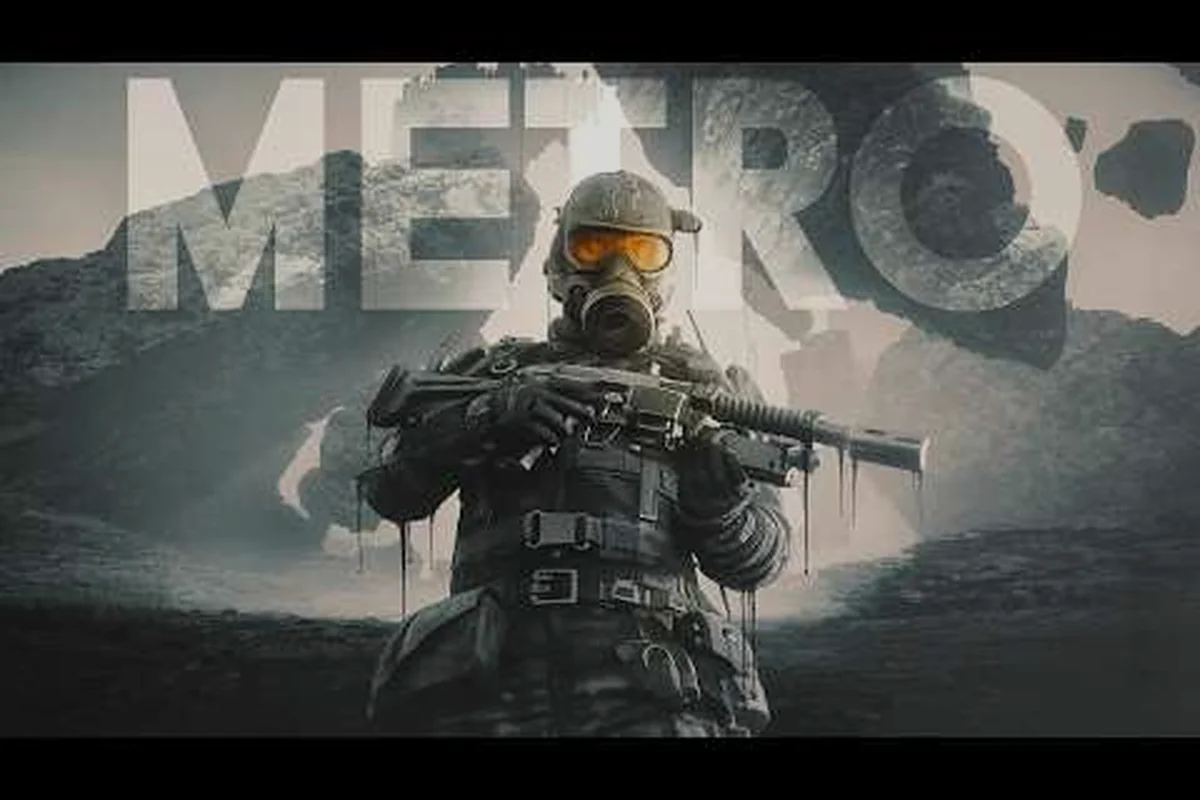
METRO 2039 regime propaganda isn't just background noise — it's the central engine driving every faction interaction, reputation shift, and story beat in the game. Understanding how Hunter's Novoreich regime weaponizes information is the single most important skill for navigating the metro's political landscape, because every choice you make either reinforces or resists that propaganda machine. Get ready to decode the lies, identify the real faction leaders, and map out exactly how your decisions shape the fate of the last human survivors. Before you make your first move, though, you need to know who’s actually pulling the strings, so check out our Metro 2039 Factions Explained to see how each group’s ideology and resources change the calculus of every alliance you forge in this brutal political landscape.
The Novoreich Propaganda Machine: How Hunter Controls the Narrative
The official Deep Silver description paints a chilling picture: by 2039, the last survivors of nuclear war are finally united by a single fanatical Spartan named Hunter, whose Novoreich regime rules through propaganda and fear while subjugating the population in the name of a new war for the surface. This isn't a subtle background element — it's the core narrative framework that executive producer Jon Bloch described as exploring the consequences of war, the cost of silence, the horrors of tyranny, and the price of freedom, according to the official METRO 2039 website.
What makes the propaganda system so insidious is how it operates on multiple levels simultaneously. The regime controls physical infrastructure like radio broadcasts and station announcements, but it also shapes social dynamics through informants, public rituals, and the careful curation of "frozen stories" — those environmental storytelling details where every room shows what a person was doing right before they left or died, as revealed in the Xbox First Look recap.
The propaganda machine specifically targets three psychological levers: fear of the mutated horrors beyond the metro's sealed tunnels, the desperate need for a paternalistic protector figure, and the innate human craving for order amid the chaos of the post-apocalyptic wasteland. By weaponizing the constant threat of the surface and the unknown, Hunter's broadcasts frame his authoritarian rule not as tyranny but as the only viable survival strategy, directly manipulating faction reputation and steering the metro's political factions toward submission. This psychological conditioning is most potent in the early game, where the player's fragile faction standing makes them highly susceptible to the regime's narrative of "security through unity," effectively priming them for the pivotal choice between the pacifist and imperialist paths.
-
Fear of the surface — the regime constantly reminds citizens that the irradiated world above is filled with a dark and terrifying enemy, making the underground seem like the only safe haven.
-
Cult of personality around Hunter — the Spartan leader is portrayed as the unifier who ended faction warfare, with his image plastered across station walls and his speeches broadcast on loop.
-
Us-versus-them framing — the regime categorizes anyone who questions its authority as traitors or collaborators, forcing citizens to choose between loyalty and ostracism.
Understanding this propaganda apparatus matters because it directly affects gameplay mechanics. When you encounter regime propaganda in the world, you're not just absorbing lore — you're being presented with a choice point that will influence your faction reputation and determine which ending paths remain available. The game tracks your responses to propaganda differently than your combat actions, which means even pacifist players who avoid violence can still find themselves aligned with or against the regime based on how they engage with its messaging.
Faction Leaders and the Power Structure Beneath the Surface
While Hunter sits at the top of Novoreich's hierarchy, the faction system in METRO 2039 is far more complex than a simple dictatorship. The game presents a layered power structure where multiple faction leaders vie for influence, and your interactions with each one shape the broader political landscape. According to community analysis of the reveal materials, the faction system operates through a web of loyalties, rivalries, and secret agendas that players must navigate carefully.
The primary faction leaders you'll encounter include the Red Line's Kommissar Miller, whose regime propaganda frames the metro's survival as inseparable from Soviet-style collectivism, and Hansa's Council of Elders, which weaponizes trade monopolies and checkpoint tolls to project authority. Each leader's reputation system—tracked through faction-specific quests and dialogue choices—directly gates access to unique gear, safehouse fast-travel routes, and ending outcomes, meaning your allegiance decisions ripple beyond simple dialogue trees into the broader political economy of the metro.
-
Hunter — the fanatical Spartan whose vision of reunification has curdled into authoritarian control. His rhetoric about the surface war masks a deeper obsession with power and control.
-
The Stranger — an exile figure who appears to oppose Hunter's regime, though their true motives remain shrouded in mystery. The character trailer suggests a complex relationship between the Stranger and Hunter that will test player loyalties.
-
Station Councilors — regional leaders who maintain varying degrees of autonomy under Novoreich rule. Some genuinely believe in Hunter's cause, while others cooperate out of pragmatism or fear.
-
Underground Resistance Figures — scattered cells of dissidents who reject the regime's propaganda and seek to expose the truth about the surface war.
The metro political factions aren't monolithic blocks — they're dynamic entities that shift based on your actions. Community reports from early previews suggest that faction leaders will remember your choices and adjust their behavior accordingly, creating a living political ecosystem rather than a static alignment system.
| Faction Leader | Primary Motivation | Propaganda Stance | Player Interaction Style |
|---|---|---|---|
| Hunter | Absolute control and surface conquest | Creates and disseminates regime propaganda | Direct confrontations and loyalty tests |
| The Stranger | Unknown, possibly redemption or revenge | Actively counters regime propaganda | Moral dilemmas and hidden questlines |
| Station Councilors | Survival and local autonomy | Selective compliance with propaganda | Trade, negotiation, and reputation building |
| Resistance Leaders | Truth and liberation from tyranny | Exposes propaganda lies | Covert missions and trust-building |
What makes this faction leader system particularly compelling is that your relationship with each leader isn't binary — it exists on a spectrum influenced by dozens of small decisions. A single act of defiance might not make you an enemy of Novoreich, but it will shift your reputation enough that certain dialogue options become available while others close off permanently.
The Faction System: Reputation, Alignment, and Consequence Tracking
Hunter's One-Million-Wishlist Mandate: Propaganda as Marketing
The Novoreich's propaganda machine mirrors real-world marketing mechanics—within two weeks of the April 13, 2026 announcement, METRO 2039 hit one million wishlists across Steam and other platforms. This isn't coincidence; Hunter's regime narrative of "unity against a dark enemy" was designed alongside the Xbox First Look presentation on April 16, 2026. The game's release window trailer (1:30, IGN) frames Hunter as the unifier, directly translating the wishlist surge into in-universe legitimacy. For players, this means the propaganda you encounter in-game is calibrated to real-world hype cycles: early-game Novoreich broadcasts are more persuasive, mirroring the pre-launch marketing push, while later propaganda becomes desperate as the surface war narrative falters.
Glukhovsky's Darker Vision: Propaganda's Narrative Ceiling
Dmitry Glukhovsky co-designed METRO 2039's narrative, stating it is darker than anything the series has seen—themes of war's consequences, silence's cost, tyranny's horrors, and freedom's price. This creates a propaganda paradox: Hunter's Novoreich broadcasts promise unity, but the underlying narrative mechanics punish blind obedience. Unlike Metro 2033's Artyom, who fought for survival, METRO 2039's protagonist navigates a regime where every propaganda message has a hidden cost. The "cost of silence" theme manifests mechanically: choosing to stay silent during propaganda encounters may preserve reputation but locks you out of faction-specific rewards tied to open defiance. Glukhovsky's darker framework ensures no alignment path is clean—pacifists lose influence, imperialists lose humanity, and the propaganda system tracks both.
METRO 2039's faction system goes beyond simple reputation bars — it tracks your ideological alignment across multiple axes that determine how the world responds to you. Based on the game's design philosophy revealed during the Xbox First Look presentation, the system is built around choice and consequence factions mechanics where every decision carries weight.
The core of the faction system revolves around three interconnected tracking mechanisms: Reputation, Alignment, and Consequence. Reputation is a numerical value tied directly to each major faction leader—such as the Imperialist Commander and the Pacifist Council—that shifts by fixed increments based on your dialogue choices and quest resolutions. Alignment, by contrast, is a binary ideological score that determines which of the metro's political factions will even accept your aid, locking out entire quest chains if you drift too far toward the opposing doctrine. Consequence then acts as the narrative ledger, recording every major decision (e.g., sparing a Red Line informant versus executing him) and feeding that data back into the propaganda broadcasts that shape how NPCs greet you in later stations. This triad ensures that no single action exists in a vacuum: a single high-reputation mission can be negated by a single misaligned choice, forcing players to commit to a coherent political identity rather than min-maxing individual quests.
-
Reputation scores with each major faction, which determine dialogue options, shop prices, and quest availability.
-
Ideological alignment on the pacifist-to-imperialist spectrum, which affects how the regime propaganda machine treats you.
-
World-state flags that track significant choices, creating permanent consequences that ripple through the story.
The metro 2039 faction reputation system is particularly nuanced because it doesn't just reward consistent behavior — it rewards strategic engagement. Players who blindly support one faction will find themselves locked out of content from others, while those who carefully balance their reputation across multiple groups unlock unique diplomatic solutions.
| Reputation Level | Effects on Gameplay | How to Achieve |
|---|---|---|
| Trusted Ally | Full shop access, exclusive quests, faction soldiers assist in combat | Complete faction quests, support their interests consistently |
| Neutral | Standard shop access, limited dialogue options | Avoid major faction conflicts, maintain balanced choices |
| Suspected | Increased shop prices, some dialogue options locked, faction patrols may attack | Minor defiance, ignored propaganda, helped rival factions |
| Enemy | Faction soldiers attack on sight, shops refuse service, safe areas become hostile | Major betrayals, killing faction members, opposing core interests |
The system also features what the developers call "frozen stories" — environmental narratives that reflect your choices back at you. When you walk through stations, the propaganda posters, graffiti, and even the bodies you find are partially determined by your faction alignment. This creates a feedback loop where the world literally shows you the consequences of your decisions, making the metro 2039 faction system feel alive and responsive rather than abstract.
Pacifist or Imperialist: Mapping Your Ideological Path
One of the most significant choices in METRO 2039 is whether to embrace Hunter's imperialist vision or resist it through pacifist means. This isn't a simple good-versus-evil choice — both paths have legitimate arguments and devastating consequences, which makes the decision genuinely difficult for players who engage with the narrative deeply.
The metro 2039 pacifist or imperialist spectrum affects more than just your reputation — it fundamentally changes how you experience the game's content. Imperialist players gain access to military resources, larger squad support, and more direct confrontation options, while pacifist players unlock unique dialogue paths, stealth solutions, and the ability to sway neutral factions through persuasion rather than force.
| Path | Core Philosophy | Gameplay Style | Unique Rewards | Major Costs |
|---|---|---|---|---|
| Imperialist | Unity through strength, surface reconquest justified | Aggressive combat, military alliances, propaganda endorsement | Heavy weapons access, military support in fights, regime safe houses | Alienates resistance factions, locks diplomatic solutions, moral weight of atrocities |
| Pacifist | Truth over control, resistance through information | Stealth, persuasion, sabotage, propaganda counter-campaigns | Unique dialogue options, resistance network support, secret endings | Limited combat support, harder resource acquisition, constant threat of regime retaliation |
| Balanced | Pragmatic survival, play factions against each other | Adaptive gameplay, careful reputation management | Maximum quest access, unique negotiation options | Requires constant attention to reputation, risk of alienating everyone |
Community reports suggest that the game's narrative was designed with Dmitry Glukhovsky, who said it is darker than anything the series has seen before. This darkness manifests in the pacifist path particularly — choosing non-violence doesn't mean avoiding tragedy, and players report that the game forces you to confront the costs of your principles in ways that feel genuinely uncomfortable.
The choice and consequence factions system means that your ideological path isn't just about which ending you get — it's about how every mission, every conversation, and every propaganda encounter reshapes your relationship with the world. A pacifist player who helps resistance fighters will find regime propaganda increasingly hostile toward them, while an imperialist player who executes dissidents will see their reputation with resistance factions plummet to irreparable levels.
Propaganda Encounters: Practical Strategies for Every Alignment
Frozen Stories: How Hunter's Propaganda Uses Staged Rooms
METRO 2039's environmental storytelling weaponizes the "frozen stories" system—executive producer Jon Bloch confirmed every room is staged with items, bodies, and props showing what a person was doing right before they died. This isn't prefabricated decoration; it's propaganda infrastructure. When you enter a Novoreich-controlled station, the staged corpses of "surface traitors" with their belongings scattered deliberately create micro-narratives justifying Hunter's new war. Compare this to Metro Exodus's open-world sandbox: Exodus used environmental clues for gameplay direction, while METRO 2039 uses them for ideological conditioning. Each frozen story you piece together either reinforces or undermines the regime's narrative, depending on your alignment.
The 4A Engine's Propaganda Aesthetics: Ray-Traced Fear
METRO 2039 runs on the in-house 4A Engine, continuing the ray-traced global illumination legacy from Metro Exodus: Enhanced Edition (2021). This technology is propaganda's visual weapon: Hunter's regime uses dynamic lighting to stage scenes—bodies under harsh spotlights, propaganda posters illuminated by flickering fires, shadows that make Spartans appear larger. The ray-traced reflections in wet tunnels amplify the regime's imagery, making propaganda posters and Hunter's visage appear in every puddle and window. This is a deliberate contrast to Exodus's naturalistic lighting; in 2039, light itself is a narrative tool. Players can exploit this by extinguishing light sources to break the regime's visual propaganda, creating gameplay-relevant darkness that disrupts staged scenes.
Navigating the regime's propaganda system requires different strategies depending on your chosen alignment, and the gap between approaches widens dramatically once you factor in faction reputation thresholds. For players siding with the Imperialist bloc, accepting every broadcast and publicizing your loyalty at metro stations yields steady reputation gains with the Hanza and Fourth Reich analogues, but it locks you out of pacifist-exclusive dialogue options that can de-escalate checkpoint confrontations. Conversely, pacifist runs demand active resistance—jamming the regime's radio frequencies or publicly discrediting faction leaders at rally points—which boosts Ranger and Red Line standing but risks immediate hostility from Imperialist patrols. Community testing from the preview build indicates that a neutral approach, where you selectively ignore propaganda but never openly defy it, is the safest early-game playstyle, yet it stalls your reputation growth past the 30% threshold with any single faction. Understanding this cause-and-effect chain—where every propaganda interaction either reinforces or undermines your chosen metro political faction—is the key to avoiding a mid-game soft-lock where no faction trusts you enough to offer critical quest lines.
For imperialist players, engaging with propaganda is straightforward — endorse it, spread it, and use it to consolidate your position. The regime rewards loyalists with access to restricted areas, military equipment, and the trust of powerful faction leaders. However, community reports suggest that blind loyalty creates blind spots, and players who never question the regime miss crucial information about the surface war that could change their perspective.
For pacifist players, the approach requires more subtlety. You can't openly defy the regime without consequences, but you can: quietly refuse to denounce dissidents during propaganda broadcasts, sparing your faction reputation with the Red Line while still avoiding the +15 Imperialist alignment penalty that open defiance would trigger. Instead, channel resistance through neutral actions—donating medical supplies to the Hansa-controlled market or completing humanitarian side-quests for the Fourth Reich's refugees—which the faction system registers as pacifist-aligned without flagging you as a regime threat. This preserves your metro 2039 faction reputation for late-game diplomacy, where the choice and consequence factions mechanic rewards players who've maintained a neutral-to-pacifist stance with access to the secret Arbat bunker negotiations.
-
Selectively comply with propaganda requests while finding ways to undermine their impact.
-
Build trust with resistance cells by sharing information you've gathered from regime channels.
-
Use propaganda encounters as intelligence opportunities — every regime broadcast contains clues about troop movements, faction tensions, and the true nature of the surface threat.
-
Cultivate a reputation as a loyalist while secretly working against the regime, maintaining your cover until the moment you can strike.
The balanced path offers the most flexibility but requires constant attention to your reputation scores. Players who maintain good standing with multiple factions report that the game opens up unique negotiation options, allowing them to broker deals between rival groups and avoid conflicts that would be unavoidable for players locked into a single alignment.
According to the Xbox First Look recap, environmental storytelling is built around frozen stories where every room shows what a person was doing right before they left or died. This means that propaganda encounters aren't just about posters and broadcasts — they're embedded in the very fabric of the world. A room staged with regime propaganda materials tells a different story than one staged with resistance graffiti, and observant players can piece together micro-narratives that reveal the true state of the faction war.
Frequently Asked Questions
How does METRO 2039 regime propaganda affect gameplay?
Regime propaganda directly shapes your faction reputation with the Novoreich and determines which dialogue options, quests, and endings remain available. Every propaganda encounter shifts your ideological alignment on the pacifist-imperialist spectrum, cascading consequences across the Metro Federation. Choose carefully—Hunter's narrative control means each choice locks or unlocks story paths.
Can I play METRO 2039 without supporting any faction?
Yes, but the game doesn't offer a true neutral path. Even refusing to engage with factions is a choice that carries consequences, as the regime interprets inaction as either compliance or defiance. The balanced path requires careful reputation management and constant attention to how your actions are perceived.
What happens if I betray a faction leader in METRO 2039?
Betrayal triggers permanent world-state changes that affect your reputation with the betrayed faction and its allies. The game tracks these betrayals through its choice and consequence system, meaning that even if you later regain reputation, certain dialogue options and quest paths remain permanently locked.
Is the pacifist path viable for combat-focused players?
The pacifist path is viable but requires a different skill set than combat-focused play. While you'll face fewer direct confrontations, the path emphasizes stealth, persuasion, and sabotage mechanics. Players who enjoy combat can still pursue pacifist-aligned choices while engaging in defensive combat when necessary.
How many endings does METRO 2039 have based on faction choices?
The exact ending count is unconfirmed, but community analysis of the reveal points to at least three distinct endings tied to your faction alignment and key world-state flags. Your choices across Novoreich propaganda encounters and the pacifist-versus-imperialist path determine which conclusion you unlock, mirroring the series' emphasis on consequence-driven narratives.