
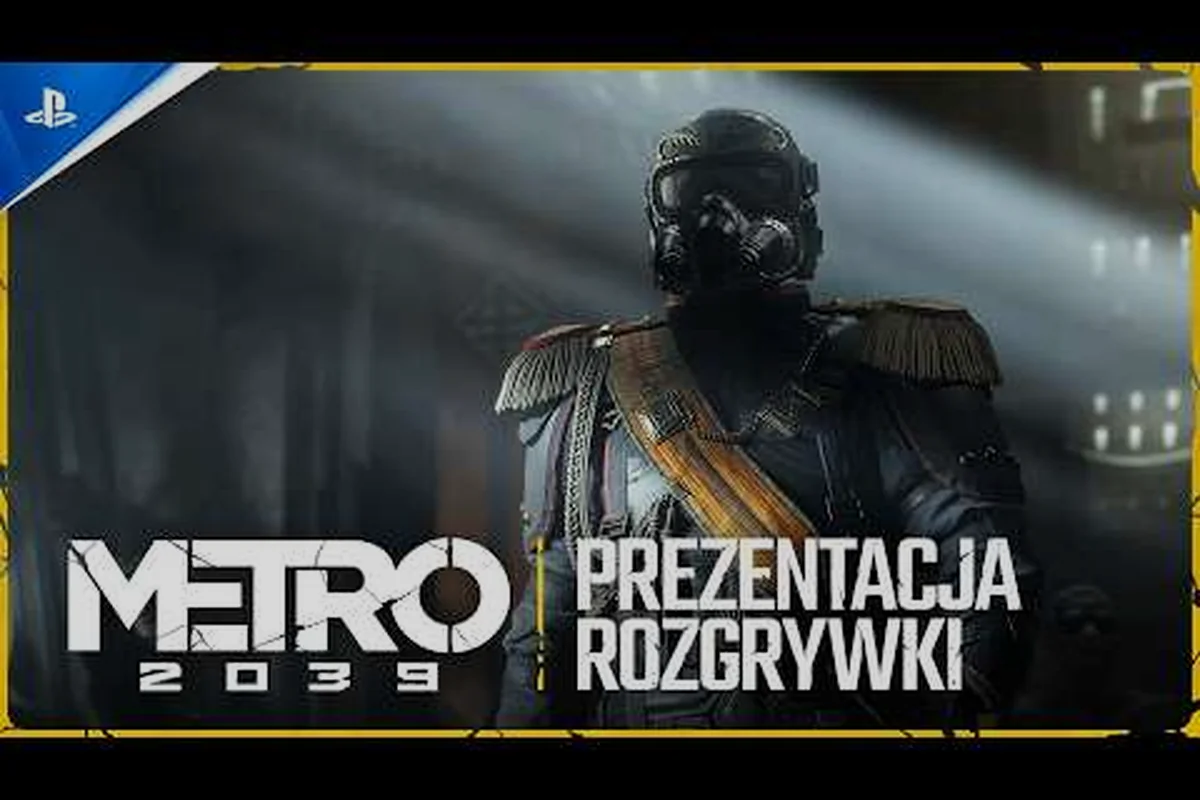
The METRO 2039 Spartan rangers carry a legacy that stretches back to the original Order, but by 2039 that legacy has been twisted into something unrecognizable. When the official Deep Silver description calls Hunter a "fanatical Spartan" who unites the last survivors under his Novoreich regime, it raises a critical question: what happened to the rangers who once protected the Metro's innocent? This article traces the Spartan Order's evolution from its Metro 2033 roots through the faction's transformation under Hunter, examines how the Red Line, Fourth Reich, Hansa, and Polis fit into the new power structure, and explains what the unification means for the metro factions reunited under one banner. Understanding this history matters because it defines every faction interaction you will have in the game, from who patrols which tunnels to which stations offer safe passage.
The Spartan Order: From Protectors to Enforcers
The Spartan Order began as the Metro's most disciplined fighting force, founded on the principle that rangers exist to protect the innocent rather than rule them. Artyom's journey in Metro 2033 and Metro Last Light cemented the Order's reputation as the last honest military power beneath Moscow, with rangers like Miller embodying the self-sacrifice that defined the faction's early identity. By the time of Metro Exodus, the Order had evolved into a mobile strike force that ranged far beyond the tunnels, but its core doctrine remained intact: serve the people, not yourself.
That doctrine collapsed when Hunter assumed leadership. The same fanatical determination that made him a legendary ranger in the original games became the foundation for something far more dangerous. According to the official METRO 2039 website, Hunter now rules through propaganda and fear, subjugating the population in the name of a new war for the surface. The Spartan rangers who once guarded the Metro's fragile peace now enforce Hunter's will, trading their protector role for that of regime enforcers.
| Era | Spartan Ranger Role | Leadership | Core Doctrine |
|---|---|---|---|
| Metro 2033 | Tunnel guardians | Miller | Protect the innocent |
| Last Light | Peacekeepers | Miller | Balance between factions |
| Exodus | Surface expeditionaries | Miller / Alyosha | Explore and reclaim |
| METRO 2039 | Regime enforcers | Hunter | Unify through fear |
The transformation did not happen overnight. Community reports suggest that Hunter's rise followed a pattern familiar to students of authoritarian takeovers: first, he positioned himself as the only leader capable of ending faction warfare; second, he consolidated the Order's military resources under his personal command; third, he redefined dissent as treason. By 2039, the Spartan rangers have become the Novoreich's iron fist, and their iconic armor now inspires fear rather than hope among the station dwellers they once protected.
The Red Line and Fourth Reich: Old Rivals Under New Rule
The metro 2039 red line metro faction represents one of the most dramatic reversals in the new power structure. The Red Line, once the Communist authoritarian state that controlled the eastern tunnels, built its identity on ideological purity and centralized command. Its rivalry with the Spartan Order defined Metro Last Light's political landscape, with both factions viewing the other as an existential threat. Under Hunter's unification, however, the Red Line's leadership faced an impossible choice: submit to Novoreich authority or face military annihilation.
The Fourth Reich faced a similar dilemma, though its neo-Nazi ideology made submission particularly bitter. The Reich's racial purity doctrines and slave labor camps were abhorrent to the Spartan Order's original values, yet Hunter's pragmatism apparently overrode any moral objections. According to player speculation on community forums, Hunter likely offered the Reich's leadership a deal: retain internal autonomy over their stations in exchange for military support and ideological silence. The Red Line conflict analysis explores how these forced alliances create the story's central tensions.
| Faction | Pre-2039 Ideology | Post-Unification Status | Resistance Potential |
|---|---|---|---|
| Red Line | Communist authoritarianism | Subjugated vassal | Moderate |
| Fourth Reich | Racial purity | Reluctant ally | Low |
| Spartan Order | Protect the innocent | Regime enforcers | High (internal) |
| Hansa | Trade and neutrality | Economic administrator | Low |
The metro 2039 fourth reich metro presence under Novoreich rule creates uncomfortable gameplay scenarios. You will encounter Reich soldiers patrolling alongside Spartan rangers, and their distinct armor silhouettes make for easy identification in combat. However, their loyalty to Hunter remains questionable, and community data suggests that some Reich units secretly maintain their old ideologies, creating potential for faction infighting that the player can exploit. The forced cooperation between these historical enemies demonstrates how thoroughly Hunter has reshaped the Metro's political map.
Hansa and Polis: The Economic and Cultural Centers
The Spartan Order's Internal Hierarchy Under Hunter
Hunter's rise to power in 2039 did not merely rebrand the Spartan Rangers—it restructured their command. The Novoreich regime elevated a fanatical inner circle of Spartans above the traditional Ranger ranks, creating a two-tier enforcement system. Regular Spartan Rangers retained their tunnel-patrol duties and station-defense roles, while Hunter's elite enforcers gained authority to override station commanders and requisition supplies without Hansa approval. This hierarchy mirrors the Spartan Order's original military discipline but weaponizes it: where the Order once protected Metro stations from mutants and bandits, Hunter's enforcers now police political dissent, using the same combat training against civilians who resist Novoreich propaganda.
Hansa's Economic Leverage Under Novoreich Taxation
Hansa's trade network did not collapse under Hunter—it was co-opted. The Novoreich regime imposed a 30% tithe on all Hansa commercial transactions, a levy that fundamentally altered the Metro's economy. Merchants who once traded freely between Polis and outlying stations now operate under Spartan-issued trading permits, with unlicensed trade classified as sedition. This economic stranglehold gives players a unique pressure point: disrupting Hansa supply manifests through reduced ammunition availability at station vendors and inflated gas-mask filter prices in Novoreich-controlled hubs. The game's economy system tracks Hansa's compliance level, and players who sabotage Novoreich supply convoys can trigger localized shortages that weaken Spartan patrol effectiveness in adjacent tunnels.
The metro 2039 hansa metro faction represents the commercial heart of the unified Metro. Hansa, the trade confederation that controlled the ring line, built its power on commerce rather than military might. Its merchants moved goods between stations, set exchange rates, and maintained a fragile neutrality that allowed trade to flourish even during the worst faction conflicts. Under Novoreich rule, Hansa's role has shifted from independent trader to state-sanctioned economic administrator.
This transition carries significant gameplay implications. The Hansa-controlled stations now serve as the primary hubs for currency exchange, crafting material merchants, and information brokers. However, the faction's compliance comes at a cost: Hansa merchants must pay substantial tribute to the Novoreich, and that cost gets passed down to players through inflated prices. Savvy players learn to identify which Hansa stations offer fair rates and which ones have been squeezed so hard that their prices border on extortion.
The metro 2039 polis metro faction, centered on the legendary Polis station, holds a different kind of power. Polis has always been the Metro's cultural and intellectual capital, home to the largest library, the most advanced workshops, and the remnants of pre-war knowledge that survived the apocalypse. The station's neutrality was historically protected by its strategic location and the respect other factions held for its scholarly traditions. Under Hunter's unification, Polis's independence has been curtailed, but the station retains significant soft power through its control of information and technology.
| Station | Historical Role | 2039 Status | Player Value |
|---|---|---|---|
| Hansa Ring | Trade network | Economic administration | Currency, merchants |
| Polis | Cultural capital | Controlled intellectual center | Lore, upgrades |
| Exhibition | Artyom's home | Novoreich garrison | Story, early quests |
| D6 | Military installation | Hunter's command center | Endgame content |
The relationship between Hansa and Polis under Novoreich rule creates interesting gameplay dynamics. While Hansa controls the flow of goods, Polis controls the flow of knowledge, and both factions compete for Hunter's favor. Players can exploit this rivalry by playing factions against each other, earning reputation bonuses from both sides while maintaining independence. The faction system explained guide breaks down how these reputation mechanics work in practice.
The Unifier Hunter: How One Man Reunited the Metro
The Red Line's Subjugation: Tactical Differences From the Fourth Reich
The Red Line's absorption into Novoreich differs fundamentally from the Fourth Reich's fate, and this distinction shapes gameplay encounters. Under the Reich, stations were forcibly converted to Novoreich doctrine with immediate military occupation—resistance was crushed within weeks. The Red Line, however, retained its bureaucratic apparatus as a subjugated administrative layer. Red Line stations under Hunter's rule still display communist-era signage and maintain their old supply chains, but Spartan enforcers now audit every shipment. For players navigating these territories, Red Line stations feature more civilian NPCs and fewer uniformed patrols than Reich sectors, creating stealth-friendly corridors but denser informant networks that trigger alarm states faster than the Reich's overt checkpoint system.
Andriy Shevchenko's Frozen Stories Design in Novoreich Stations
Creative director Andriy Shevchenko's "frozen stories" level-design approach returns in METRO 2039, and it carries specific narrative weight in Novoreich-controlled stations. Unlike Metro Exodus's open environments, 2039 stages rooms with items and bodies to tell micro-narratives—a Spartan enforcer's quarters might reveal propaganda posters alongside a hidden family photograph, or a Red Line office contains execution orders pinned beneath a portrait of Hunter. These confined-space narratives deliberately contrast with Exodus's scope, using denser environmental storytelling to show how Novoreich's propaganda machine rewrites personal histories. Players who inspect these staged scenes unlock codex entries that document the regime's victims, rewarding exploration with lore that directly contextualizes Hunter's authoritarian rule.
The metro 2039 unifier hunter narrative presents one of gaming's most compelling villain arcs. Hunter's journey from heroic ranger to authoritarian dictator mirrors the classic "road to hell is paved with good intentions" trope, but with a distinctly Metro twist. His stated goal—uniting humanity to fight the surface threat—carries genuine merit. The surface has become more dangerous than ever, and the Metro's internal conflicts have cost thousands of lives that could have been spent preparing for the real enemy.
Hunter's unification strategy followed a calculated sequence that players can trace through the game's environmental storytelling. First, he consolidated Spartan Order loyalty through a combination of personal charisma and strategic promotions. Second, he leveraged the surface threat to justify emergency powers, positioning himself as the only leader capable of organizing a unified defense. Third, he systematically dismantled faction leadership structures, replacing independent commanders with Novoreich loyalists. The Stranger character analysis reveals how the protagonist's nightmare sequences expose the human cost of this consolidation.
The metro 2039 metro factions reunited achievement represents the culmination of Hunter's project, but the game asks players to question whether this unity is worth its price. The official Xbox First Look presentation described the game as "going back to what makes Metro, Metro," and that includes the moral complexity of choosing between freedom and security. Hunter's regime delivers order, efficient resource distribution, and coordinated defense against mutant threats, but it also demands absolute obedience and crushes dissent with brutal efficiency.
| Unification Phase | Method | Player Impact |
|---|---|---|
| Consolidation | Spartan loyalty programs | Restricted access to Order equipment |
| Legitimization | Surface threat propaganda | Increased mutant attack frequency |
| Subjugation | Faction leadership replacement | New faction reputation systems |
| Enforcement | Public executions of dissenters | Moral choice opportunities |
| Mobilization | Forced conscription drives | Companion recruitment changes |
The game's narrative structure forces players to navigate this new political reality. Some quests require cooperation with Novoreich forces, while others offer opportunities to support the resistance movement. The independent stations resistance guide details how players can align with underground opposition groups without triggering immediate regime retaliation.
Spartan Ranger Gameplay: Faction Mechanics and Station Control
Understanding Spartan ranger mechanics is essential for navigating METRO 2039's faction system. The Spartan ranger patrol routes determine which areas are safe to traverse and which require stealth or combat. Rangers patrol major station arteries, check identification papers at checkpoints, and respond to reports of suspicious activity. Their presence creates a constant tension between the freedom to explore and the risk of detection.
The station control system represents one of the game's most innovative faction mechanics. Each major station has a control value that shifts based on player actions, faction missions, and story progression. High Novoreich control means more ranger patrols, stricter checkpoint procedures, and higher prices at Hansa merchants. Low control creates opportunities for resistance activities but also attracts regime crackdowns that can lock down entire station sectors.
| Station Control Level | Ranger Presence | Merchant Prices | Resistance Access |
|---|---|---|---|
| Total Control | Heavy patrols | +30% markup | Blocked |
| Moderate Control | Regular checkpoints | +15% markup | Limited |
| Contested | Sporadic patrols | Standard prices | Partial |
| Resistance Held | Minimal presence | -10% discount | Full access |
Players who maintain positive reputation with the Spartan Order gain access to exclusive equipment and mission types. The Order's armory contains some of the game's most powerful weapons, including the Gauss rifle variant that uses electromagnetic acceleration for devastating single-shot damage. However, earning this reputation requires completing regime missions that may conflict with the player's moral compass, creating a meaningful trade-off between mechanical power and narrative integrity.
The ranger armor system deserves special attention. Spartan ranger armor provides superior ballistic protection and environmental resistance compared to civilian gear, but it also marks the player as regime-aligned to NPCs. This visual distinction affects dialogue options, merchant pricing, and faction reactions throughout the game. Some players report that wearing full ranger armor causes resistance members to refuse quests entirely, while others find that the intimidation factor opens unique dialogue paths with Novoreich officials.
Practical Strategies for Navigating Novoreich Territory
Navigating Novoreich-controlled territory requires a different approach than the free exploration of previous Metro games. The checkpoint system demands that players maintain valid identification papers, which can be obtained through legitimate registration or forged through black market contacts. Legitimate registration provides clean papers but flags the player as a regime subject, while forged papers carry the risk of random inspections that can expose the deception.
The patrol timing system adds a tactical layer to station navigation. Ranger patrols follow predictable routes with specific timing patterns, and observant players can track these patterns to move between safe zones without detection. The game provides subtle environmental cues—radio chatter, light signals, and NPC conversations—that hint at patrol movements. Experienced players report that learning these patterns reduces detection encounters by up to 60% in high-control stations.
| Navigation Strategy | Risk Level | Reward | Best Used For |
|---|---|---|---|
| Legitimate registration | Low | Clean access | Early game exploration |
| Forged papers | Medium | Full access | Black market trading |
| Stealth movement | High | No paper trail | Resistance missions |
| Bribery | Variable | Immediate passage | Emergency escapes |
| Combat avoidance | Medium | Preserved resources | Resource conservation |
The propaganda system represents another layer of Novoreich control. Throughout the Metro, players encounter loudspeakers broadcasting regime messages, posters depicting Hunter as humanity's savior, and public gatherings designed to manufacture consent. Interacting with these propaganda elements provides lore context but also affects the player's mental state, which the game tracks through a morale system that influences dialogue options and NPC reactions.
Players who choose to resist the regime face unique challenges. The resistance movement operates through hidden safe houses, coded messages, and clandestine supply caches. Joining the resistance requires passing a trust test that involves completing missions without alerting Novoreich authorities. The story analysis of Hunter's regime examines how the game's narrative deliberately avoids romanticizing either side of this conflict, presenting both the regime's order and the resistance's chaos as flawed alternatives.
Frequently Asked Questions
What happened to the Spartan rangers between Exodus and METRO 2039?
The Spartan Order underwent a leadership transition after Metro Exodus, with Hunter rising to power through a combination of military success and political maneuvering. Community reports indicate that Hunter gradually replaced veteran rangers who questioned his methods with loyal recruits, transforming the Order from protectors into enforcers over several years.
How do the Red Line and Fourth Reich fit into the Novoreich structure?
Both factions were subjugated through a combination of military pressure and political negotiation. The Red Line retained limited internal autonomy in exchange for military support, while the Fourth Reich accepted ideological silence to preserve its territorial control. Neither faction fully embraces Novoreich rule, creating opportunities for faction infighting.
Can I join the Spartan rangers as a player faction?
Yes, but joining requires completing a series of regime missions that establish your loyalty to Hunter's vision. The recruitment process takes approximately six to eight hours of gameplay and includes a final trial that tests your willingness to enforce regime authority, even against innocent civilians.
What is the metro 2039 unifier hunter's ultimate goal?
Hunter's stated objective is unifying all Metro factions to launch a coordinated war against the surface threat. However, the game's narrative suggests that his true motivation may be more personal, with the surface war serving as justification for absolute control. The ending reveals whether his unification project succeeds or collapses.
How does the metro 2039 metro factions reunited achievement work?
The achievement triggers after completing faction missions for the Spartan Order, Red Line, Fourth Reich, Hansa, and Polis, then choosing unification-aligned dialogue options. This unlocks Novoreich authority acknowledgment and the surface deployment ending. For the full sequence, side with Hunter during the Polis council confrontation and complete Hansa's economic subjugation quests first.