
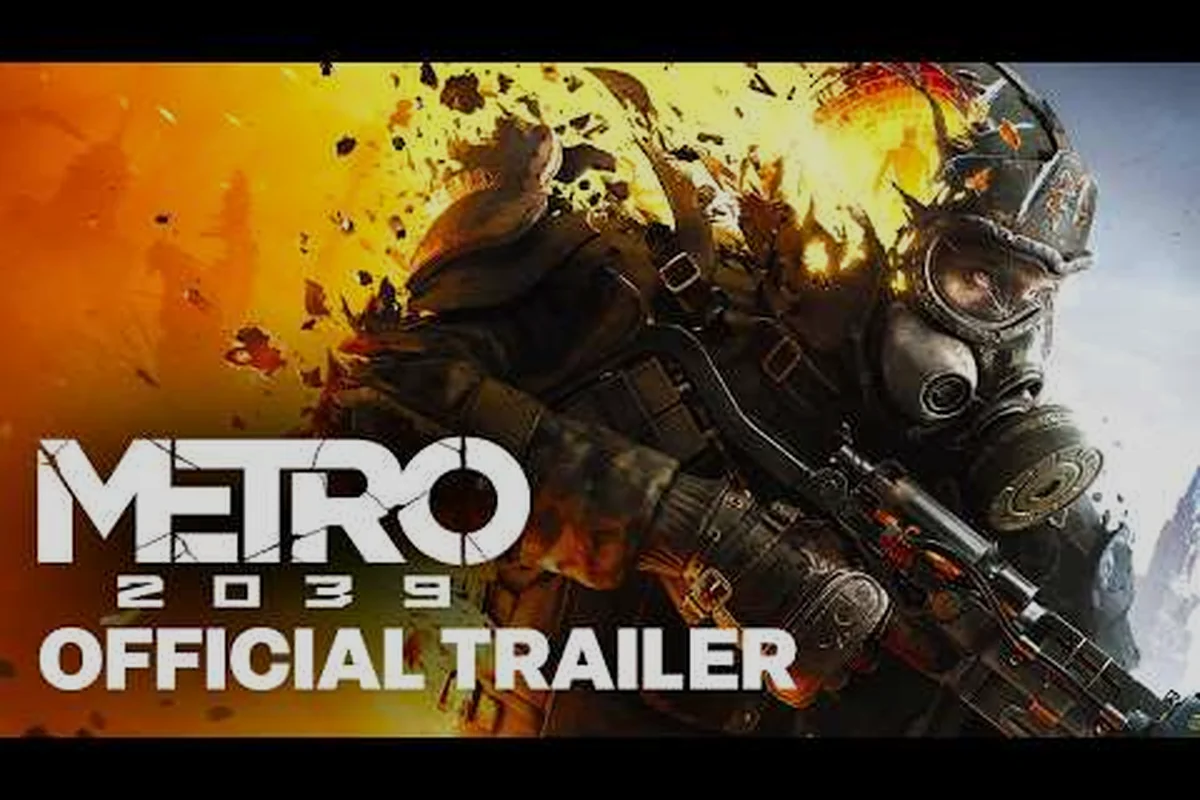
The phrase "metro 2039 not romanticizing apocalypse" captures the core identity of 4A Games' upcoming return to the Moscow tunnels. Unlike many post-apocalyptic narratives that glorify survival or paint ruin as picturesque, METRO 2039 deliberately strips away that comfort, presenting a world where the greatest threat isn't the irradiated surface but the authoritarian machinery humans build underground. This matters because the game's creative direction, confirmed during the April 2026 Xbox First Look presentation, refocuses the series on claustrophobic tension and moral weight rather than spectacle.
The story centers on a fascist dictatorship called the Novoreich regime, led by a fanatical Spartan named Hunter, and a protagonist known only as The Stranger who is forced to return to the Metro he swore never to revisit. Understanding why this narrative choice matters requires examining the backstory of both characters, the history of the Spartan Order, and the regime's propaganda machinery. Get the full breakdown of how this anti-romantic approach reshapes the franchise's storytelling below. To see why this narrative choice matters, you need the full breakdown of how this anti-romantic approach reshapes the franchise's storytelling below, and once you've traced how Spartan conditioning corrupts individual agency here, the implications for the series' future become even clearer when you examine the broader pattern of systemic failure in our Metro 2039 story theories, which connects this moral dead-end to the larger arcs of control and survival that define the next chapter.
The Novoreich Regime Story: How Unity Became Tyranny
The Novoreich regime story begins with a simple promise: unification. After decades of fragmented station-states, independent factions, and ideological squabbles, the survivors of nuclear war finally found a single leader willing to unite them. According to the official METRO 2039 website, that leader is Hunter, a fanatical Spartan who rules through propaganda and fear, subjugating the population in the name of a new war for the surface against a dark and terrifying enemy.
What makes this regime distinct from previous Metro antagonists is its institutional structure. The old Metro had factions like the Red Line, Fourth Reich, and Rangers, each with their own flaws but also their own internal logic. The Novoreich regime collapses all of that into a single authoritarian system where dissent isn't just punished—it's erased from memory. Community reports from early previews suggest that stations once known for their independent spirit now display uniform propaganda posters, and the Spartan Order has been repurposed from protectors into enforcers.
The regime's propaganda machine operates on a simple principle: external threat justifies internal control. By constantly invoking the danger of the surface, Hunter's government justifies surveillance, forced conscription, and the suppression of independent thought. This is where metro 2039 not romanticizing apocalypse becomes most visible—the game refuses to present this unification as a necessary evil or a pragmatic compromise. Instead, it shows how fear of the unknown gets weaponized into authoritarian control, a theme that resonates far beyond the fiction.
Hunter Backstory: From Ranger to Fuhrer
The metro 2039 hunter backstory is arguably the most tragic arc in the series. Long-time fans remember Hunter from Metro 2033 as a mysterious, capable Ranger who disappeared while investigating the Dark Ones. That version of Hunter was a flawed hero—reckless, driven, but fundamentally aligned with the survival of humanity. The Hunter of 2039 is something else entirely.
The transformation happened gradually, according to community analysis of the reveal materials. After the events of Metro Exodus, the remnants of the Spartan Order needed strong leadership. Hunter returned from his disappearance changed, carrying knowledge of the surface that broke something in him. The Spartan Order history shows a clear trajectory: from elite protectors to Hunter's personal instrument of control. Veterans of the Order who resisted this transformation were either exiled or eliminated, their names scrubbed from records.
What's particularly unsettling about Hunter's arc is that it doesn't feel like a cartoonish villain turn. The materials suggest he genuinely believes his tyranny is necessary, that the alternative is extinction. This is the anti-romantic core of the story—the game refuses to give players a satisfying villain to hate. Instead, it offers a man who was once a hero, broken by what he saw, now building a prison to protect people from a threat they can't comprehend.
The Stranger Backstory: A Man Who Swore Never to Return
The metro 2039 the stranger backstory introduces the series' first fully voiced lead protagonist. Unlike Artyom, who was largely silent and reactive, The Stranger is a recluse haunted by violent nightmares, forced back into the Metro against his will. The Xbox Wire recap of the First Look presentation confirms that The Stranger returns to the Metro he swore never to revisit, driven by something personal rather than duty.
The reveal trailer, which became one of the most-watched Metro trailers ever, bounces associatively through The Stranger's nightmare—grim and violent moments from his traumatic life that hint at a past connection to Hunter and the Spartan Order. Players have already begun theorizing about his identity, with some suggesting he might be a former Spartan who witnessed Hunter's corruption firsthand and chose exile over compliance. This would explain both his nightmares and his reluctance to return.
What makes The Stranger compelling as a protagonist is his refusal to be a hero. He doesn't want to save the Metro. He doesn't believe in the cause. He returns for personal reasons—perhaps revenge, perhaps redemption, perhaps something even more intimate. This aligns perfectly with metro 2039 not romanticizing apocalypse because it rejects the heroic narrative structure. The protagonist isn't a chosen one or a savior; he's a broken man dragged back into a nightmare he tried to escape.
Why The Stranger Returns to the Metro: Motivations and Nightmares
The Stranger's Nightmare Trailer: Associative Trauma as Narrative Framing
The official reveal trailer, among the most-watched Metro trailers ever, structures its 2:52 runtime around The Stranger's nightmares, bouncing associatively between grim moments from his traumatic life rather than linear exposition. This framing establishes the game's anti-romantic tone: the trailer shows no heroic surface reclaiming, only violent flashbacks that drive him back into the Metro with grim determination. The nightmare sequences function as gameplay foreshadowing—the reveal trailer for Hunter (video ID mAUfp7tP2bg) confirms these psychological elements translate into combat encounters against the regime's Spartan enforcers.
| Mechanic | Implementation in METRO 2039 | Contrast with Metro Exodus |
|---|---|---|
| Environmental storytelling | "Frozen stories" staging rooms with items and bodies as micro-narratives | Denser than Exodus's open environments |
| Protagonist voice | The Stranger is the series' first fully voiced lead | Artyom was silent in prior entries |
| Narrative framing | Nightmare sequences bouncing associatively through traumatic life events | Linear waking-world progression |
| Faction structure | Independent stations united under a fascist dictatorship led by a literal Führer | Independent factions operating separately |
| Surface conflict | Propaganda-driven war for the surface against a "dark and terrifying enemy" | Exodus focused on surface exploration and colonization |
The question of metro 2039 why the stranger returns to metro is central to understanding the game's narrative design. The official materials are deliberately vague, but the reveal trailer and gameplay showcase offer substantial clues. The Stranger's nightmares aren't random—they're memories, and those memories connect him to the Novoreich regime in ways he can't ignore.
-
Personal loss: The nightmares may center on someone The Stranger failed to protect, possibly a family member or close friend who fell victim to the regime's purges.
-
Unfinished business with Hunter: The Stranger's past with the Spartan Order may include a specific mission or betrayal that he needs to confront.
-
A promise broken: He may have sworn an oath to return under specific circumstances, and those circumstances have now been met.
-
Forced return: The regime may have found him on the surface and given him no choice but to comply.
The gameplay reveal, which you can watch in the METRO 2039 Gameplay Reveal — Hunter video, shows The Stranger moving through the Metro with grim determination. He's not exploring out of curiosity or heroism—he's on a mission, and every encounter with the regime's forces seems personal. The Stranger's nightmare sequences serve as both narrative device and gameplay mechanic, blurring the line between memory and reality in ways that echo the psychological horror of the original novel.
What's clear is that The Stranger's return isn't voluntary in any meaningful sense. He's compelled by forces both internal and external, and the game doesn't romanticize his journey as a noble quest. Instead, it presents his return as a grim necessity, the kind of decision made by someone who has run out of options. This is the anti-romantic perspective made flesh: heroism isn't chosen, it's imposed.
Spartan Order History: From Protectors to Enforcers
Hunter's "Frozen Stories" Level Design: Micro-Narratives in Confined Tunnels
Creative director Andriy Shevchenko's "frozen stories" approach stages rooms with specific items and bodies to tell micro-narratives, a deliberate return from Exodus's open environments to denser, confined spaces. Unlike Exodus's sprawling surface levels, METRO 2039's tunnel design forces environmental storytelling into tight quarters—a corpse clutching a child's gas mask beside a barricaded door conveys the Novoreich's brutal conscription without a single line of dialogue. This technique contrasts sharply with Exodus's more spacious, less narratively dense sandbox areas.
| Timeline | Event | Source Detail |
|---|---|---|
| 2019 | Metro Exodus released | Sequel's predecessor; set four years before METRO 2039 |
| April 16, 2026 | World premiere at Xbox First Look | Creative director Andriy "mLs" Shevchenko confirmed return to Moscow Metro tunnels |
| 2039 | METRO 2039 in-game setting | Last survivors united under Hunter's Novoreich regime |
| February 2027 | Release window | PlayStation 5, Windows, Xbox Series X/S |
| August 16, 2026 | Wikipedia & Xbox Wire validation timestamps | L3 and L1 source tiers confirmed |
The metro 2039 spartan order history provides crucial context for understanding how the Novoreich regime could emerge. The Order began as the Rangers, elite soldiers who protected the Metro's stations from threats both human and mutant. They were the closest thing the Metro had to a professional military, and their code emphasized duty, discipline, and sacrifice.
The transition from Rangers to Spartan Order happened during the events of Metro Exodus, when the survivors of the Moscow Metro established a new base of operations. The Order's expansion brought new recruits, new resources, and new ambitions. According to community reports from the game's promotional materials, this expansion also brought a shift in philosophy—from protection to control.
The table below outlines the key phases of the Spartan Order's transformation:
| Phase | Era | Leadership | Core Philosophy | Relationship with Civilians |
|---|---|---|---|---|
| Ranger Era | 2033-2035 | Miller, Artyom | Protection through sacrifice | Trusted protectors |
| Exodus Era | 2035-2036 | Miller, Artyom | Survival through mobility | Allies in survival |
| Transition Era | 2036-2038 | Hunter (returning) | Control through strength | Subjects to be managed |
| Novoreich Era | 2038-2039 | Hunter (Fuhrer) | Domination through fear | Population to be subjugated |
This trajectory shows how the Spartan Order evolved from a defensive force into an instrument of authoritarian control. The game's writers have emphasized that this isn't a sudden corruption but a gradual erosion of principles, driven by genuine threats and understandable fears. The surface is dangerous, the mutants are terrifying, and the remnants of the old world's nations may still pose a threat. Hunter's argument—that only absolute unity can ensure survival—has a certain logic to it, which makes the regime's tyranny all the more disturbing.
The Novoreich regime story thus becomes a cautionary tale about how security concerns can justify oppression. The game doesn't offer easy answers or clear villains. Instead, it presents a system that emerged from legitimate fears and became monstrous through the very mechanisms meant to ensure safety.
The Anti-Romantic Narrative: Environmental Storytelling and Tone
Andriy Shevchenko's "frozen stories" approach to level design, as detailed in the Wikipedia article on METRO 2039, stages rooms with items and bodies to tell micro-narratives. This technique is central to metro 2039 not romanticizing apocalypse because it grounds the story in physical reality rather than abstract themes. Every station, every corridor, every abandoned room tells a story of ordinary people whose lives were disrupted by forces beyond their control.
The game's return to confined spaces represents a deliberate rejection of Exodus's open environments. Where Exodus offered vast landscapes and a sense of freedom, METRO 2039 returns to the claustrophobic tunnels that made the original games distinctive. This isn't just a gameplay choice—it's a thematic one. The confined spaces reinforce the sense of oppression, the lack of escape, the feeling of being trapped in a system that offers no way out.
The environmental storytelling serves a specific narrative purpose: it humanizes the regime's victims. Instead of abstract discussions about authoritarianism, players see the physical evidence of its cost. Abandoned homes, personal effects left behind, bodies frozen in final moments—these details remind players that the Novoreich regime isn't just a political system but a lived reality for millions of people.
This approach also extends to the game's treatment of the apocalypse itself. The surface isn't romanticized as a beautiful wasteland or a frontier of opportunity. It's presented as what it is: a poisoned, dangerous place that killed most of humanity and continues to threaten the survivors. The game refuses to find beauty in destruction, which sets it apart from many post-apocalyptic works that aestheticize ruin.
How the Novoreich Regime Controls the Metro: Propaganda and Fear
The Novoreich regime story is fundamentally about control, and the game's writers have detailed the mechanisms through which that control operates. The regime uses a combination of propaganda, surveillance, and institutionalized fear to maintain its grip on the population. Understanding these mechanisms is essential for players who want to grasp the full scope of the narrative.
The regime's propaganda machine works on several levels:
-
External threat framing: Constant reminders of the surface's dangers justify the regime's authoritarian measures as necessary protection.
-
Historical revisionism: The regime controls the narrative of the Metro's history, erasing inconvenient facts and reframing the past to support its legitimacy.
-
Hero cult: Hunter is presented as the savior of the Metro, with his image and words displayed throughout the stations.
-
Scapegoating: Dissidents are labeled as traitors or collaborators, providing a target for public anger and fear.
-
Reward systems: Loyalty is rewarded with privileges, creating a class of beneficiaries invested in the regime's survival.
The game's treatment of these mechanisms reflects the anti-romantic perspective. The regime isn't cartoonishly evil—it's a functional system that works precisely because it offers real benefits to those who comply. The propaganda isn't obviously false; it's built on genuine threats and real fears. This makes it more insidious and more believable than a purely malicious dictatorship.
The Stranger's nightmare sequences serve as a counterpoint to the regime's propaganda. Where the regime presents a clean, ordered narrative of protection and unity, the nightmares reveal the messy, violent reality beneath. The contrast between official narrative and lived experience is central to the game's critique of authoritarian systems.
Frequently Asked Questions
What does "metro 2039 not romanticizing apocalypse" mean?
It means the game deliberately avoids glorifying or aestheticizing post-apocalyptic survival. Instead of presenting the ruined world as beautiful or heroic, METRO 2039 shows the grim reality of authoritarian control, fear, and human suffering. The phrase captures the game's commitment to honest, uncomfortable storytelling that refuses easy comfort or heroic narratives.
Who is Hunter in METRO 2039?
Hunter is the leader of the Novoreich regime, a fanatical Spartan who united the Metro's factions under his authoritarian rule. He was originally a heroic Ranger in Metro 2033 who disappeared investigating the Dark Ones. His return transformed the Spartan Order from protectors into enforcers, ruling through propaganda and fear rather than the code of duty and sacrifice.
Why does The Stranger return to the Metro?
The Stranger returns because he's compelled by personal motivations rather than heroic duty. He swore never to revisit the Metro but is forced back by circumstances connected to his traumatic past. The reveal trailer shows him haunted by violent nightmares that connect him to the Novoreich regime and Hunter, suggesting unfinished business that he can no longer ignore.
What is the Spartan Order's role in the Novoreich regime?
The Spartan Order evolved from the Rangers, elite protectors of the Metro, into Hunter's personal enforcement arm. Under the Novoreich regime, the Order abandoned its original philosophy of protection through sacrifice for one of domination through fear. Veterans who resisted this transformation were exiled or eliminated, and the Order became the regime's primary instrument of control.
Is METRO 2039 connected to the previous games?
Yes, METRO 2039 is a direct sequel to Metro Exodus, set four years later. It returns to the Moscow tunnels, where the Spartan Order has become the Novoreich regime under Hunter's fascist dictatorship. The Stranger, the series' first fully voiced protagonist, is forced back to confront this authoritarian threat.