
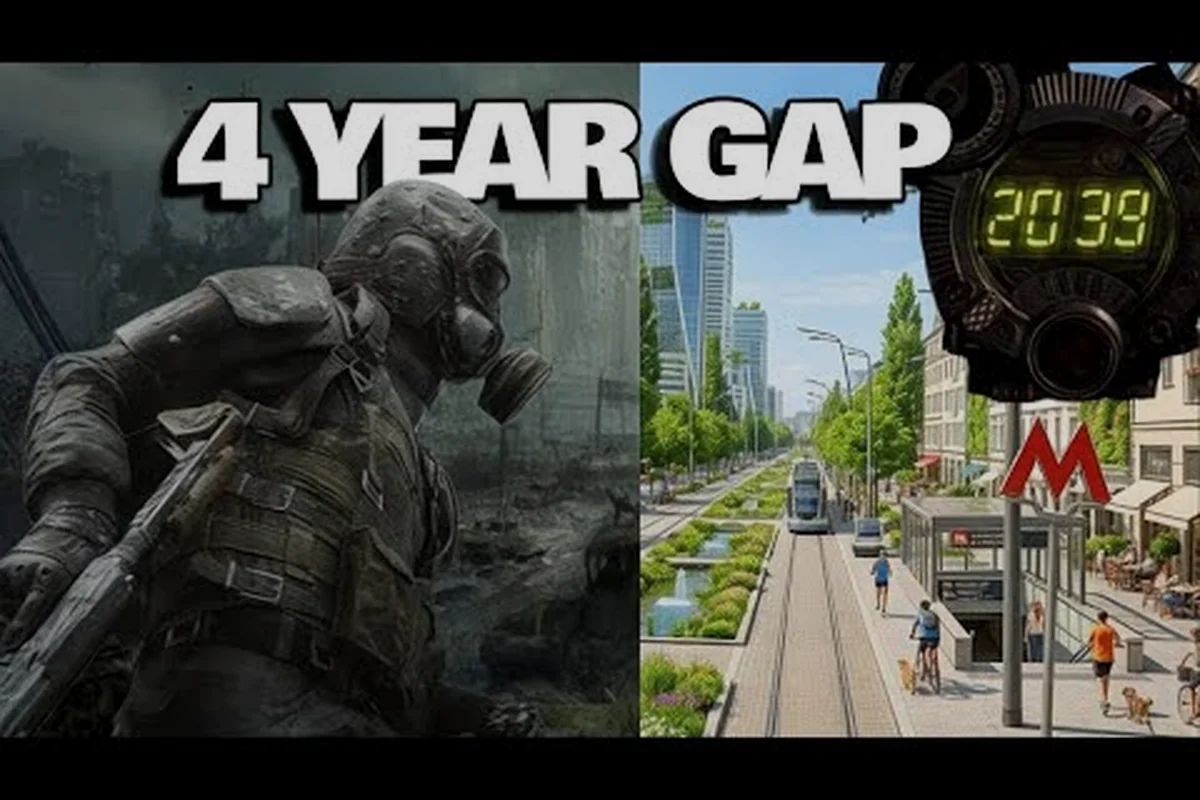
The question of whether METRO 2039 is a novel adaptation comes up constantly in community discussions, and the answer shapes what you should expect before launch. Unlike the 2033 and 2035 games, which adapted Dmitry Glukhovsky's novels with varying degrees of fidelity, this new entry is an original story written for the game medium with Glukhovsky's direct involvement as a collaborator rather than a source-text author. That distinction matters because it changes how you should approach the plot, the characters, and the themes. The official FAQ from Deep Silver confirms the game is designed as a jumping-on point for new fans while still rewarding legacy players with connections to the existing universe, which means you do not need to read any books or finish Exodus to understand what is happening.
What makes this particularly interesting is that 4A Games deliberately chose to build a fresh narrative framework rather than adapt the 2034 novel, which had no direct game counterpart. The team wanted to explore the consequences of the world they had already built, especially the political vacuum left after Exodus, and that required a new protagonist, a new faction structure, and a new central conflict. This article breaks down how the original story approach works, what it means for the metro 2039 plot, and why the metro 2039 story endings will likely diverge from anything you have seen in the books or previous games.
The Original Story Approach: Why 4A Skipped the 2034 Novel
The decision to create an original story rather than adapt Glukhovsky's 2034 novel stems from a practical reality: the book follows Homer and Hunter in a way that does not translate cleanly into the interactive, choice-driven format the studio has perfected. Instead of forcing a narrative fit, 4A Games and Glukhovsky co-developed a new scenario that explores the Novoreich regime and the Stranger's exile, concepts that exist only in the game's canon. This is a fundamental shift from the metro 2039 novel adaptation question that many players assume applies here.
The development history reveals why this approach made sense. According to the Metro 2039 Wikipedia entry, work continued after 4A confirmed a new single-player Metro title in November 2020, split between its Kyiv and Malta offices. Russia's invasion of Ukraine in February 2022 changed the studio's plans dramatically, with electricity outages forcing reliance on batteries and generators, and a deliberate shift toward a Ukrainian perspective in the narrative. That lived experience could not be channeled through a direct book adaptation; it demanded a new story that could address themes of occupation, resistance, and authoritarianism with the weight they deserve.
| Story Source | Game Adaptation | Original Story |
|---|---|---|
| Metro 2033 novel | Metro 2033 (2010) | — |
| Metro 2034 novel | — (skipped entirely) | — |
| Metro 2035 novel | Metro Exodus (2019) | — |
| No direct source | — | METRO 2039 (2027) |
The table above shows the pattern clearly: every previous game mapped to a specific novel, but METRO 2039 breaks that tradition. This is the first mainline entry without a corresponding book, which means the metro 2039 plot is uncharted territory even for readers who have consumed every Glukhovsky text. The original story not book adaptation status is not a marketing gimmick; it is a structural decision that gives the writers freedom to kill characters, reshape factions, and introduce consequences without being bound to literary canon.
For players wondering whether they need to read the books first, the answer is no. The game is designed as a fresh entry point, and the official METRO 2039 website explicitly states that new fans can start here while legacy players will appreciate the ties to the existing universe. That dual-audience approach is only possible because the story does not depend on prior knowledge; it builds on the world's foundation without requiring you to have experienced every prior beat.
How the New Narrative Connects to the Metro Universe
The Diegetic Watch UI and Ammo Pressure Mechanics
The Xbox First Look footage revealed a critical gameplay shift: the traditional HUD is replaced by a diegetic watch-based interface, meaning health and radiation status are read in-universe rather than via screen overlays. This ties directly into the combat sequence where The Stranger's weapon misfires mid-fight against Nosalises — a deliberate design choice signaling that hand-crafted weaponry degrades under pressure. Players must monitor maintenance through the watch UI, as a misfire during a Nosalis swarm forces a knife finisher and heavy-door escape, demonstrating that ammo conservation alone won't save you; weapon upkeep is equally survival-critical.
The One-Million-Wishlist Momentum and Its Narrative Implications
Within two weeks of the April 13, 2026 announcement — and the April 16 Xbox First Look — METRO 2039 surpassed one million wishlists across Steam and other platforms. This unprecedented pre-release demand directly influenced 4A's storytelling confidence: with legacy fans and newcomers both watching, the decision to feature a new protagonist (The Stranger) and new cast members like Hunter as the entry point becomes a calculated risk. The r/metro community's speculation about Artyom, Miller, Khan, and Anna's returns remains unofficial, but the wishlist surge suggests 4A can afford to keep classic characters sidelined while building the Novoreich conflict around fresh faces.
Even though METRO 2039 is an original story, it does not exist in a vacuum. The game is set four years after the events of Metro Exodus, and the world has moved on in ways that directly reference the previous entries. The Spartan Order has been transformed into an enforcement arm of the Novoreich regime, the Red Line and Fourth Reich have been absorbed or destroyed, and the surface has become a frozen battlefield where a new enemy threatens everything. These connections are woven into the metro 2039 story without requiring you to have played Exodus, but they reward attentive players with a deeper understanding of how the world evolved.
The narrative structure uses what 4A calls the Frozen Stories approach, where environmental storytelling carries significant plot weight. Ruined stations, propaganda posters, and abandoned personal effects tell the story of how Hunter consolidated power and how the Stranger ended up exiled. This is a deliberate departure from the book-driven exposition of earlier games, and it aligns with the studio's stated goal of making the world feel lived-in rather than narrated. If you want to understand how this technique works in practice, the environmental storytelling examples guide breaks down specific instances from the reveal trailer and gameplay footage.
| Connection Point | Previous Game Reference | METRO 2039 Role |
|---|---|---|
| Spartan Order | Metro Exodus (2019) | Enforcers of Novoreich |
| Artyom's fate | Metro Exodus (2019) | Mentioned, not shown |
| The Dark Ones | Metro 2033 (2010) | Absent, but referenced |
| Hunter | Metro 2033 (2010) | Central antagonist figure |
The table above illustrates how the new game treats its legacy connections: they are touchstones rather than plot requirements. The metro 2039 plot does not revolve around Artyom's fate or the Dark Ones' return; it focuses on the Stranger's journey and the moral choices that define the Novoreich conflict. That focus allows new players to engage with the story on its own terms while veterans recognize the broader implications of what happened to the world they once explored.
Glukhovsky's role in this process deserves attention. He did not simply hand over a manuscript and walk away; he collaborated with 4A Games on the story's themes, character arcs, and moral questions. The result is a narrative that feels like Metro in tone and texture without being constrained by the novels' plot structure. This is the metro 2039 original story not book adaptation distinction made tangible: you get the philosophical weight of Glukhovsky's writing, but the events themselves are new and unpredictable.
The Stranger and Hunter: New Characters Driving the Plot
Why 4A Skipped the 2034 Novel: The Ukrainian Perspective Shift
The February 2022 invasion forced 4A Games to abandon any direct adaptation of Dmitry Glukhovsky's Metro 2034 novel. With electricity outages in Kyiv requiring batteries and generators, the studio deliberately pivoted the narrative toward a Ukrainian perspective rather than retreading the book's linear plot. This decision explains why the game is titled METRO 2039 — set four years after Metro Exodus — and not a chapter-by-chapter novel retelling. The original story approach allowed 4A to address real-world wartime themes through the Novoreich regime instead of being constrained by the source material's existing character arcs.
The Stranger's Weapon Misfire: A Tutorial in Maintenance Strategy
The reveal's combat sequence functions as a masterclass in 4A's new maintenance mechanics. When The Stranger's firearm jams against the Nosalises, the game isn't punishing the player — it's teaching that hand-crafted weapons have failure states absent from Metro Exodus's more reliable arsenal. The escape route through a closing heavy door shows how environmental interaction compensates for weapon failure, a pattern likely repeated in ruined stations. For veterans, this signals a shift from pre-war military hardware to scavenged, unreliable gear, meaning early-game resource allocation should prioritize cleaning kits over ammunition stockpiles.
The metro 2039 plot centers on two figures: the Stranger, a masked protagonist who returns to the metro after exile, and Hunter, the former Spartan Ranger who has become the authoritarian leader of the Novoreich regime. Neither character has a direct literary counterpart, which means their arcs are not bound by book canon. This is a significant departure from previous games, where Artyom's journey followed the novels' structure even when gameplay diverged.
The Stranger's motivation is rooted in a recurring nightmare that drives them back to the tunnels, but the specifics of that nightmare and its connection to the larger conflict remain a mystery that the story unfolds gradually. The character is designed to be a blank slate for player projection, similar to Artyom, but with a crucial difference: the Stranger has a defined past that is revealed through gameplay rather than narration. That past includes an exile, a betrayal, and a connection to the Novoreich regime that the player must uncover.
Hunter's transformation from the stoic ranger of Metro 2033 into the Fuhrer of Novoreich is the game's central tragedy. The reveal trailer shows him as a charismatic leader who genuinely believes unity requires control, and the propaganda systems in the game reflect how that belief curdles into tyranny. For a deeper dive into this character arc, the story theories article examines community speculation about whether Hunter is irredeemable or whether the game will offer a path to redemption.
| Character | Role in METRO 2039 | Literary Counterpart |
|---|---|---|
| The Stranger | Protagonist, exiled survivor | None (original) |
| Hunter | Antagonist, Novoreich leader | Loosely inspired by 2034 version |
| Novoreich soldiers | Enemy faction | None (original) |
| Spartan remnants | Allied or enemy depending on choices | Based on game canon |
The table above shows that even Hunter, who shares a name with a book character, is effectively a new creation. The 2034 novel's Hunter was a minor figure with a different personality; the game's Hunter is a fully realized antagonist whose rise to power is a central part of the metro 2039 story. This creative liberty is only possible because 4A Games chose the original story route rather than attempting a faithful novel adaptation.
The relationship between the Stranger and Hunter drives the game's emotional core. They are not simple hero-villain opposites; they are two people who once shared a cause and now stand on opposite sides of a moral divide. The game explores how power corrupts, how survival can justify atrocity, and whether redemption is possible when the damage is already done. These themes are classic Metro territory, but the execution is fresh because the characters are new.
Story Endings and Multiple Endings: What to Expect
The metro 2039 story endings are a topic of intense speculation, and the original story approach means the game is not bound by any literary conclusion. Previous Metro games featured multiple endings based on moral choices, and METRO 2039 appears to continue that tradition with even more branching potential. The moral choice system tracks your actions across the campaign, and the ending you receive depends on how you treat enemies, whether you help or exploit civilians, and how you respond to key narrative decisions.
| Ending Type | Likely Condition | Thematic Focus |
|---|---|---|
| Novoreich | High alignment with regime values | Order over freedom |
| Resistance | High alignment with rebel values | Freedom over order |
| Neutral | Balanced or mixed choices | Personal survival |
The table above outlines the probable structure based on the franchise's history, but the metro 2039 multiple endings system may introduce more complexity. The game's focus on the Novoreich regime and its propaganda machine suggests that the player's relationship with information will matter as much as their combat choices. Believing the regime's lies versus seeing through them could be a hidden variable that affects which ending you unlock.
It is important to note that these are educated guesses based on the available information, not confirmed details. 4A Games has not officially detailed the ending structure, and the game is still in development as of August 2026. The metro 2039 story endings will likely be a major talking point after launch, and the community is already theorizing about what the different outcomes might mean for the franchise's future.
The multiple endings approach also affects replayability. If the game tracks moral choices across the entire campaign, then a second playthrough with different decisions will produce a meaningfully different experience. This is a core part of the Metro formula, and METRO 2039 appears to be doubling down on it with the faction reputation system and the propaganda mechanics that shape how the world reacts to you.
Practical Tips for Engaging with the Original Story
Approaching METRO 2039 as an original story rather than a novel adaptation changes how you should play. The first piece of advice is to avoid spoilers aggressively. Because the plot is new, there is no book to read ahead and no established canon to predict the outcome. The community is already speculating heavily, and the who is the Stranger article examines the leading theories, but going in blind will give you the most impactful experience.
The second tip is to engage with the environmental storytelling rather than rushing through combat encounters. The Frozen Stories approach means that much of the plot's depth is hidden in the world itself: propaganda posters, personal diaries, and the state of the stations you visit all carry narrative weight. The metro universe guide explains how the game's world-building connects to the broader franchise, and understanding those connections will enrich your playthrough.
Third, pay attention to your moral choices from the very beginning. The game tracks your actions across the entire campaign, and early decisions can lock you out of certain endings. If you want to see the metro 2039 multiple endings, you will need to plan your playthroughs with different moral alignments in mind. This is not a game where you can make arbitrary choices and expect the best outcome; consistency matters.
Fourth, manage your expectations about book connections. If you have read all the Metro novels, you will recognize themes and references, but you will not be able to predict the plot. The game is designed to surprise even the most dedicated fans, and the metro 2039 plot takes risks that a direct adaptation could not afford. Embrace the uncertainty and let the story unfold on its own terms.
Finally, participate in the community discussion after you finish the game. The r/metro subreddit is already active with theories about the Novoreich and Hunter, and the post-launch conversation about the endings will be one of the most engaging parts of the experience. Sharing your interpretation and reading others' perspectives will deepen your appreciation of the story's complexity.
Frequently Asked Questions
Is METRO 2039 a direct adaptation of the 2034 novel?
No, METRO 2039 is an original story written for the game, not a direct novel adaptation. While Dmitry Glukhovsky collaborated with 4A Games on the narrative, the plot, characters, and events are new. The game shares thematic DNA with the books but does not follow any specific novel's storyline.
Do I need to read the Metro books before playing METRO 2039?
You do not need to read any of the books to understand the metro 2039 story. The game is designed as a jumping-on point for new fans, with a new protagonist and cast. Reading the books will enrich your understanding of the world's themes, but the plot stands on its own.
How many endings will METRO 2039 have?
The exact number of metro 2039 story endings has not been officially confirmed. Based on the franchise's history and the game's moral choice system, players expect at least three distinct endings. The metro 2039 multiple endings will likely depend on your alignment with different factions and your treatment of civilians.
Will Artyom appear in METRO 2039?
Artyom's fate is referenced but he is not expected to be a playable character. The game focuses on the Stranger as the protagonist, and the metro 2039 plot explores the consequences of the world Artyom left behind. His absence is a deliberate choice to allow the new story to stand independently.
What is the Novoreich regime in METRO 2039?
The Novoreich is a new authoritarian faction led by Hunter, the former Spartan Ranger, representing the central conflict between order and freedom. The regime rose from the metro's post-Exodus power vacuum, and the Stranger's journey tests whether resistance can dismantle Hunter's control before the Novoreich cements its grip on the tunnels.